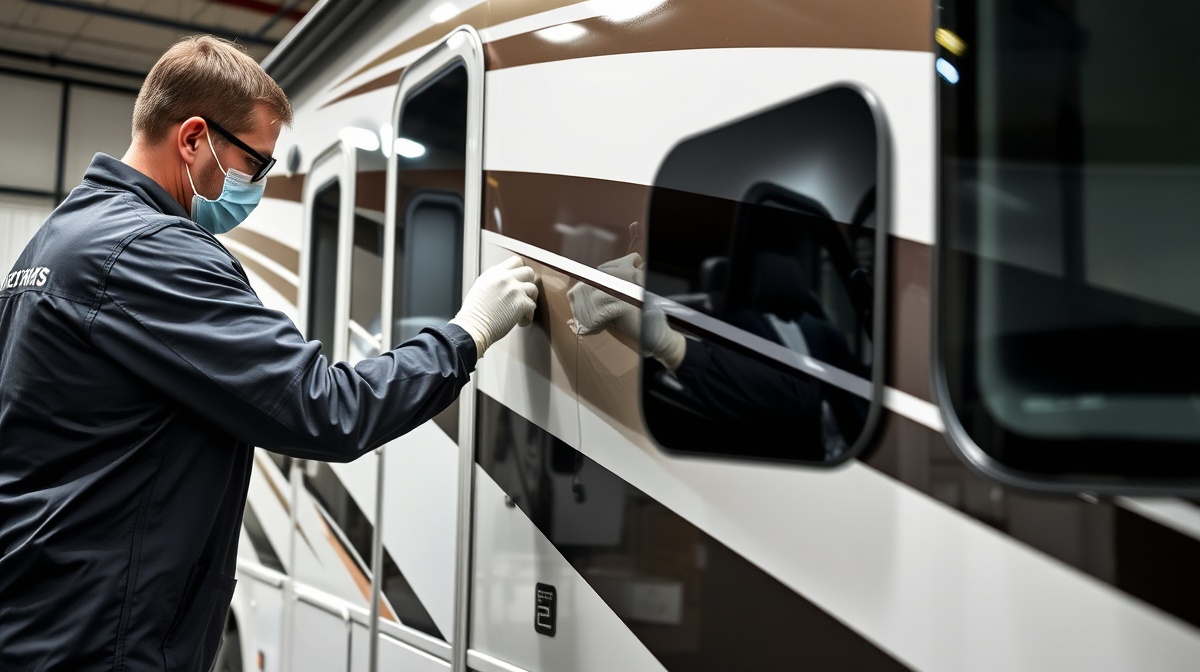
RVs are significant investments that demand superior paint protection. Your RV faces unique challenges—extended sun exposure, road travel, environmental contaminants, and extreme weather variations. Choosing the best ceramic coating for your RV requires understanding product options, application methods, and Boise-specific considerations. This comprehensive guide helps you select the perfect protection.
Understanding RV-Specific Challenges
Why RVs Need Superior Protection
RVs face paint challenges that regular vehicles don’t encounter:
Unique RV Exposure:
- Constant outdoor exposure: Most RVs spend significant time parked in sun
- Extended travel: Multi-state trips expose paint to varied conditions
- Altitude variations: From Boise’s 2,704 feet to mountain passes
- Climate transitions: Desert heat, mountain cold, and coastal moisture
- Road debris: More travel means more exposure to rocks, insects, tar
- Industrial fallout: Travel through industrial areas and highways
Cumulative Damage:
- UV damage from continuous sun exposure
- Water spots from rain across different regions
- Road salt exposure during winter travel
- Tree sap and environmental contaminants
- Chemical exposure from industrial areas
- Oxidation from extended sun exposure
Why Traditional Protection Fails RVs
Standard wax and sealants don’t work for RVs:
Wax Limitations:
- Lasts 4-12 weeks (requires reapplication during travel)
- Doesn’t handle extended sun exposure
- Water spots accumulate during travel
- Protection degrades with road salt exposure
- Requires frequent reapplication away from home
- Inconvenient and expensive for traveling owners
Ceramic Coating Advantages:
- Lasts 5-10 years (no reapplication during travel)
- Superior UV protection for extended sun exposure
- Better water beading and spot prevention
- Road salt resistance
- Maintenance washing only (no reapplication)
- Perfect for travel lifestyle
Types of Ceramic Coatings for RVs
Professional-Grade Ceramic Coatings (Recommended for RVs)
Professional coatings are applied by certified technicians and offer the best RV protection:
Top Professional Options:
System X Professional Ceramic Coating (Eagle Star Detail certified)
- Durability: 2-5 years warranty, 5-10 years with maintenance
- Hardness: 9H on Mohs hardness scale
- UV Protection: Excellent infrared reflection and UV blocking
- Water Beading: Exceptional hydrophobic properties maintained 5-10 years
- Chemical Resistance: Resists road salt, bird droppings, tree sap
- Cost: $500-2,000 installation depending on RV size
- Warranty: 3-5 year manufacturer warranty
- Best For: RV owners wanting certified professional installation
Professional Ceramic Plus Program:
- Initial professional application
- Quarterly maintenance services
- Annual refresh applications
- Warranty extension with maintenance
- Cost: $1,500-3,000 initial + $300-500/year maintenance
- Best for: RV owners wanting maximum long-term protection
Consumer-Grade Ceramic Coating Products (Not Recommended for RVs)
While available for DIY application, consumer-grade coatings have limitations:
Spray Ceramic Products:
- Durability: 6-12 months
- Hardness: 7-8H on Mohs scale
- Protection: Basic to moderate
- Cost: $20-50 per product
- Limitations: Short lifespan, uneven application, poor adhesion
- Verdict: Not suitable for extended RV travel
Consumer Wipe-On Coatings:
- Durability: 2-6 months
- Hardness: 6-7H on Mohs scale
- Protection: Minimal to light
- Cost: $30-100 per product
- Limitations: Very short lifespan, requires frequent reapplication
- Verdict: Completely unsuitable for RVs
DIY Professional-Style Kits:
- Durability: 1-2 years (if properly applied)
- Hardness: 8-9H on Mohs scale
- Protection: Good if applied perfectly
- Cost: $100-300
- Limitations: Application extremely difficult, high failure rate
- Verdict: Risk/reward not worth it for RVs; professional application strongly recommended
UV Protection: Critical for RV Coatings
Understanding UV Damage to RVs
Boise’s high-altitude location (2,704 feet elevation) creates intense UV exposure:
High-Altitude UV Impact:
- Elevation increases UV intensity by ~10-15% per 1,000 feet
- Boise receives roughly 240+ sunny days annually
- Less atmospheric filtering at higher elevation
- Summer temperatures compound UV damage
- Winter snow reflection increases exposure
Types of UV Damage:
- Oxidation: Chalky, dull surface appearance
- Fading: Color fading and discoloration
- Clear coat failure: Degradation and potential peeling
- Paint breakdown: Accelerated aging and deterioration
- Adhesion failure: Coating failure and peeling
UV Protection in Quality Ceramic Coatings
The best RV ceramic coatings include superior UV protection:
UV-Blocking Features:
- Infrared reflection: Reduces heat transfer and UV damage
- UV absorbers: Prevent UV penetration
- Titanium dioxide: Provides UV blocking capability
- Protective resin matrix: Guards against UV exposure
- Long-term stability: UV protection maintained 5-10 years
Performance Comparison Table:
| Feature | Quality Professional Coating | Budget Coating |
|---|---|---|
| UV Absorption | 99%+ | 60-70% |
| Infrared Reflection | Excellent | Poor |
| Clear Coat Protection | Excellent | Fair |
| 5-Year Fade Resistance | Excellent | Poor |
| 10-Year Durability | Good | Not applicable |
Durability and Hardness: Understanding Mohs Scale
Ceramic Coating Hardness
Hardness rating affects scratch and chemical resistance:
Mohs Hardness Scale for Coatings:
- 7H: Consumer spray coatings (glass-like)
- 8H: Premium consumer products and some professional coatings
- 9H: Top-tier professional coatings (diamond-like hardness)
- 10H: Rare, near-diamond hardness (some premium formulations)
RV-Specific Hardness Needs:
- Minimum: 8H hardness (good scratch resistance)
- Recommended: 9H hardness (excellent protection)
- Ideal: 9H+ (maximum durability)
Hardness Affects:
- Scratch resistance: Higher hardness resists swirl marks and scratches
- Chemical resistance: Harder coatings resist contaminants better
- Durability: Harder coatings last longer
- RV benefits: Critical for travel-heavy usage
Durability Expectations
Real-world durability depends on application quality and maintenance:
Professional Installation Durability:
- Year 1: Peak performance, excellent water beading, maximum gloss
- Years 2-3: Excellent protection, minimal water beading reduction
- Years 4-5: Good protection with annual maintenance
- Years 5-7: Professional refresh extends warranty, maintains protection
- Years 7-10: Regular maintenance keeps coating functional
- Beyond 10 years: Professional recoating recommended
Factors Affecting Durability:
- Installation quality: Professional installation extends life 50%+
- Maintenance routine: Regular washing maintains protection
- Environmental exposure: Boise’s sun reduces durability slightly
- Travel intensity: Heavy travel may reduce lifespan
- Professional maintenance: Annual refresh extends life significantly
Best Ceramic Coatings for Different RV Types
Class A Motorhomes
Specific Challenges:
- Large surface area (significant cost and time)
- Aluminum exterior (requires different approach)
- Aluminum oxidation prevention crucial
- Multiple material types
- Extended sun exposure from constant driving
Best Coating Options:
- Professional System X Application: $1,500-3,000+ (large surface area)
- Multi-step professional correction: Essential for aluminum
- Paint protection film combination: Consider for front sections
- Quarterly maintenance: Highly recommended
- Annual professional refresh: Extends warranty significantly
Key Considerations:
- Aluminum prep is critical for adhesion
- Larger surface requires skilled application
- Multiple material expertise required
- Investment justified by protection value
Class B and C Motorhomes
Specific Challenges:
- Moderate surface area (reasonable cost)
- Multiple exterior materials (fiberglass, aluminum, painted)
- Complex curved surfaces
- Residential-style use frequently
Best Coating Options:
- Professional System X Application: $800-1,500
- Complete paint correction first: Important
- Professional application recommended: Ensures proper adhesion
- Semi-annual maintenance: Can be DIY
- Annual professional inspection: Recommended
Cost-Benefit Analysis:
- Investment: $1,200-2,000 installed
- Benefit: 5-10 year protection
- Alternative wax costs: $1,500-3,000 over same period
- Verdict: Ceramic coating is more economical
Travel Trailers and Fifth Wheels
Specific Challenges:
- Towed constantly (additional wind exposure)
- Often parked long-term (sun damage risk)
- Various exterior materials
- Weather exposure from travel
Best Coating Options:
- Professional System X Application: $600-1,200
- UV protection critical: Essential for stationary exposure
- Professional or quality DIY: Both can work
- Quarterly inspections: Monitor for issues
- Annual refresh optional: Extends warranty
RV-Specific Benefits:
- Protects paint during extended parking
- Water beading helps with rain protection
- Reduced need for frequent washing while traveling
Truck Campers
Specific Challenges:
- Truck bed oxidation exposure
- Camper paint protection
- Combined mileage from truck driving
- Varied weather exposure
Best Coating Options:
- Professional System X: $400-800 (smaller surface)
- Paint correction: Especially important for trucks
- Full vehicle or camper-only: Depends on goals
- DIY application possible: For experienced enthusiasts
- Annual inspection: Monitor condition
Application Methods for RVs
Professional Shop Installation (Recommended)
Advantages:
- Expert preparation and execution
- Controlled environment application
- Equipment and products not available to consumers
- Warranty and guarantee
- Professional results
- Proper curing conditions
- Expertise with multiple material types
Process:
- Paint assessment: Professional evaluation
- Paint correction: If needed (usually beneficial)
- Decontamination: Complete cleaning and clay
- Prep and masking: Professional masking for precision
- Application: Multiple thin coats
- Curing: 48-hour controlled curing
- Final inspection: Quality verification
Timing:
- Total time: 3-7 days depending on correction and RV size
- Curing period: 48 hours minimum (no use of RV)
- Full strength: 30 days for optimal hardness
Cost: $600-3,000+ depending on RV size and paint condition
Mobile Application (Limited Availability)
How It Works:
- Technician comes to your location
- Application at your RV storage location
- Controlled environment tent used in some cases
Advantages:
- No towing required
- Technician expertise
- Your location
- Time savings
Disadvantages:
- Limited by weather conditions
- Outdoor environmental risks
- Not ideal for proper curing
- Limited availability
Cost: Usually 20-30% more than shop installation
DIY Application (Not Recommended for RVs)
Challenges Specific to RVs:
- Large surface area (difficult to maintain wet edge)
- Multiple material types (fiberglass, aluminum, painted)
- Complex curved surfaces
- Application environment control difficult
- Product selection confusion
- Application technique critical
Why Professional is Better:
- Professionals have equipment and expertise
- Climate-controlled environment
- Proper curing conditions
- Warranty and guarantee
- Years of experience with complex applications
- Higher success rate and better results
If DIY Is Your Choice:
- Professional-quality product only ($150-300)
- Professional preparation critical
- Multiple thin coats better than one thick
- 48-hour controlled curing required
- Patience and careful technique essential
- Plan for extended project timeline
Maintenance for Maximum RV Ceramic Coating Life
Initial 48-Hour Curing Period (Critical)
The first 48 hours determine long-term success:
During Curing:
- ✓ Park in covered garage or covered area
- ✓ Keep RV completely dry
- ✓ Avoid any water exposure
- ✓ No touching or pressure on coating
- ✓ Maintain 60-80°F temperature if possible
- ✓ Allow complete hardening
Never During Curing:
- ✗ Expose to rain or water
- ✗ Park under sprinklers
- ✗ Drive the RV
- ✗ Wash or touch the RV
- ✗ Apply any products
- ✗ Subject to temperature swings
First Week: Extended Curing
Careful Use:
- Limit water exposure to essential situations
- Avoid automatic car washes
- Park in shade
- If rain unavoidable, dry immediately after
- Don’t park under trees
- Avoid harsh driving conditions
Why This Matters:
- Coating is still bonding with clear coat
- Exposure to water during this period can compromise adhesion
- Prevents warranty issues
- Ensures maximum durability
Monthly Maintenance Routine
Essential Monthly Tasks:
- Visual inspection: Check for contaminants or issues
- Gentle wash: Every 2 weeks with pH-neutral ceramic soap
- Two-bucket method: Always use to prevent swirl marks
- Microfiber drying: Complete drying after washing
- Contaminant removal: Address tree sap, bird droppings immediately
- Water spot prevention: Dry vehicle completely
Monthly Time Commitment: 1-2 hours
Quarterly Deep Inspection
Every 3 Months:
- Paint condition assessment: Look for new damage
- Coating performance check: Test water beading
- Contaminant review: Address accumulated issues
- Professional inspection: Recommended quarterly
- Maintenance spray application: Optional but recommended
Seasonal Adjustments for Boise
Spring (March-May):
- Increase inspection frequency (dust season)
- Address pollen accumulation
- Check for winter damage
- Prepare for summer UV
Summer (June-August):
- Wash every 2 weeks minimum
- Monitor water spots from thunderstorms
- Address dust accumulation
- Store in shade when possible
- Most critical UV protection period
Fall (September-November):
- Clean accumulated residue
- Prepare for winter conditions
- Address tree sap and leaves
- Deep cleaning recommended
Winter (December-February):
- Wash immediately after road salt exposure
- Increase frequency if traveling on salted roads
- Pay attention to undercarriage
- Use deionized water if available
Annual Professional Maintenance
Yearly Recommended Service:
- Professional ceramic refresh: Reapplies protective topcoat
- Paint correction: Addresses any damage from year of use
- Warranty extension: Maintains extended warranty coverage
- Deep detail inspection: Professional assessment
- Cost: $200-500
Why Annual Refresh Matters:
- Extends warranty and protection
- Restores hydrophobic properties
- Addresses minor damage
- Maintains peak performance
- Most cost-effective long-term maintenance
Boise-Specific RV Protection Considerations
High-Altitude UV Challenge
Boise’s UV Factor:
- 2,704 feet elevation intensifies UV exposure
- 240+ sunny days annually
- Less atmospheric filtering
- Strong summer temperatures
- Winter snow reflection increases exposure
Coating Response:
- Select coatings with infrared reflection
- Annual UV protection assessment
- Summer shade parking important
- Light-colored RVs handle UV better
- Professional UV-protected topcoat application annually
Winter Road Salt Protection
Boise Winter Conditions:
- Road salt exposure during winter travel
- Minerals from deicing products
- Winter moisture accumulation
- Spring runoff exposure
Coating Advantages:
- Chemical resistance to road salt
- Hydrophobic properties shed salt
- Professional protective topcoat resists salt
- Proper washing removes salt deposits
- Annual refresh maintains salt resistance
Dust and Environmental Contaminants
Boise’s Dusty Environment:
- Dry climate creates dust accumulation
- Desert dust blows into Boise
- Industrial fallout near highways
- Pollen during spring
Coating Response:
- Smooth ceramic surface repels dust
- Easier cleaning than unprotected paint
- Hydrophobic properties help dust removal
- Professional detailing addresses embedded dust
- More frequent washing during dust season (spring/summer)
Temperature Extremes
Boise Temperature Variations:
- Summer highs: 90-100°F+
- Winter lows: 0-20°F
- Rapid temperature changes
- Freeze-thaw cycles in winter
Coating Durability:
- Quality ceramics withstand temperature extremes
- Flexibility within hardness maintains bond
- Professional-grade coatings handle transitions better
- Proper curing critical for thermal stress resistance
Cost Analysis for RV Ceramic Coating
Complete Cost Breakdown
Professional Application:
- Initial inspection and assessment: Free
- Paint correction (if needed): $400-1,500
- Ceramic coating application: $600-2,000
- Total first investment: $1,000-3,500
Annual Maintenance:
- Monthly DIY washing: Minimal supplies cost
- Professional inspection and refresh: $200-500/year
- Annual cost: $200-500
5-Year Total Cost: $2,000-5,000 10-Year Total Cost: $2,500-8,000
Alternative: Wax Approach Comparison
Wax Cost Breakdown:
- Professional application: $100-200
- Reapplication every 4-12 weeks: $50-150 each
- Quarterly cost: $200-600
- Annual cost: $800-2,400
- 5-year cost: $4,000-12,000
- 10-year cost: $8,000-24,000
Cost-Benefit Verdict
Ceramic Coating Advantages:
- Saves $2,000-16,000 over 10 years vs wax
- Superior protection and durability
- Less maintenance required
- Better appearance maintenance
- Higher resale value
Ceramic Coating is superior value for RV owners planning to keep their RV 5+ years.
Choosing the Best Ceramic Coating for Your RV
Decision Framework
Consider These Factors:
- RV Type: Class A (more investment), B/C, trailer
- Usage: Travel-heavy requires better coating
- Budget: $1,000-3,500 initial investment
- Maintenance Capability: Regular washing required
- Goals: Long-term protection vs short-term appearance
- Climate: Boise exposure requires quality coating
Recommendation Matrix
| RV Type | Usage | Budget | Best Choice |
|---|---|---|---|
| Class A | Heavy Travel | $2,000+ | Professional System X |
| Class A | Light Use | $1,500+ | Professional System X |
| Class B/C | Heavy Travel | $1,200+ | Professional System X |
| Class B/C | Light Use | $800+ | Professional or Premium DIY |
| Travel Trailer | Heavy Travel | $1,000+ | Professional |
| Travel Trailer | Light Use | $600+ | Professional or DIY |
| Truck Camper | Any | $600+ | Professional |
Professional RV Ceramic Coating at Eagle Star Detail
Eagle Star Detail provides expert RV ceramic coating services:
Our RV Expertise:
- Certified System X professional installation
- Experience with all RV types and materials
- Boise-specific climate knowledge
- Paint correction specialists
- Warranty-backed protection
- Annual maintenance program available
Our Process:
- Professional RV assessment
- Paint correction if needed
- Complete decontamination
- Expert System X application
- Professional curing and inspection
- Maintenance plan recommendation
Service Areas: Boise, Eagle, Meridian, Star, Garden City, Middleton, and throughout the Treasure Valley
FAQ: Best Ceramic Coating for RVs
Q: How long does ceramic coating last on an RV? A: 2-5 years warranty, 5-10 years with maintenance, potentially 10+ years with annual refresh.
Q: Is ceramic coating worth it for RVs? A: Yes. Long-term cost is lower than wax, protection is superior, and maintenance is minimal.
Q: Can I apply ceramic coating to my RV myself? A: Possible but not recommended. Professional application ensures proper preparation and curing.
Q: Does ceramic coating protect against rock chips? A: Not completely, but it provides some protection. Paint protection film recommended for high-impact areas.
Q: How often should I wash my ceramic coated RV? A: Every 2-3 weeks with pH-neutral ceramic soap, more frequently during harsh conditions.
Q: Will ceramic coating prevent all paint damage? A: No. It protects against UV, chemical, and environmental damage, but not against physical impacts.
Q: What’s the best protection strategy for heavy-travel RVs? A: Professional ceramic coating across the entire RV is the optimal solution for environmental protection. Combined with proper maintenance and regular inspections, it provides comprehensive protection for travel-heavy vehicles.
Serving Eagle’s Premium RV Owners
If you’re an RV owner in Eagle, Idaho’s most desirable neighborhoods—Riverstone, Lakemoor, Legacy, and along scenic Floating Feather Road—Eagle Star Detail delivers professional ceramic coating service directly to your property. Our mobile service brings the same expert installation and premium results to Eagle’s premium communities, eliminating the need to transport your RV elsewhere.
Final Recommendation
For RV owners in the Boise area, professional ceramic coating is the best paint protection investment. The combination of Boise’s intense UV exposure, travel demands, and extended parking creates perfect conditions for ceramic coating to deliver maximum value.
Choose quality professional coating, commit to basic maintenance, and your RV will maintain beautiful protection for years to come.
Ready to protect your Boise or Eagle RV? Contact Eagle Star Detail today for expert RV ceramic coating consultation and application. Discover why Treasure Valley RV owners trust Eagle Star Detail for their most valuable paint protection investment. We serve all of Eagle’s neighborhoods with mobile ceramic coating service.
About the Author
David Faustina
Founder & Certified Ceramic Coating Installer
David Faustina is a professionally trained and certified detailer specializing in paint correction, ceramic coating installation, and RV detailing. As founder of Eagle Star Detail, he personally works on every vehicle to ensure premium results and customer satisfaction.
Ready to experience professional detailing?
Eagle Star Detail specializes in professional mobile detailing throughout Boise and the Treasure Valley.