How to Remove Oxidation from an RV
Professional restoration techniques to bring back your RV's original shine and protect it long-term.
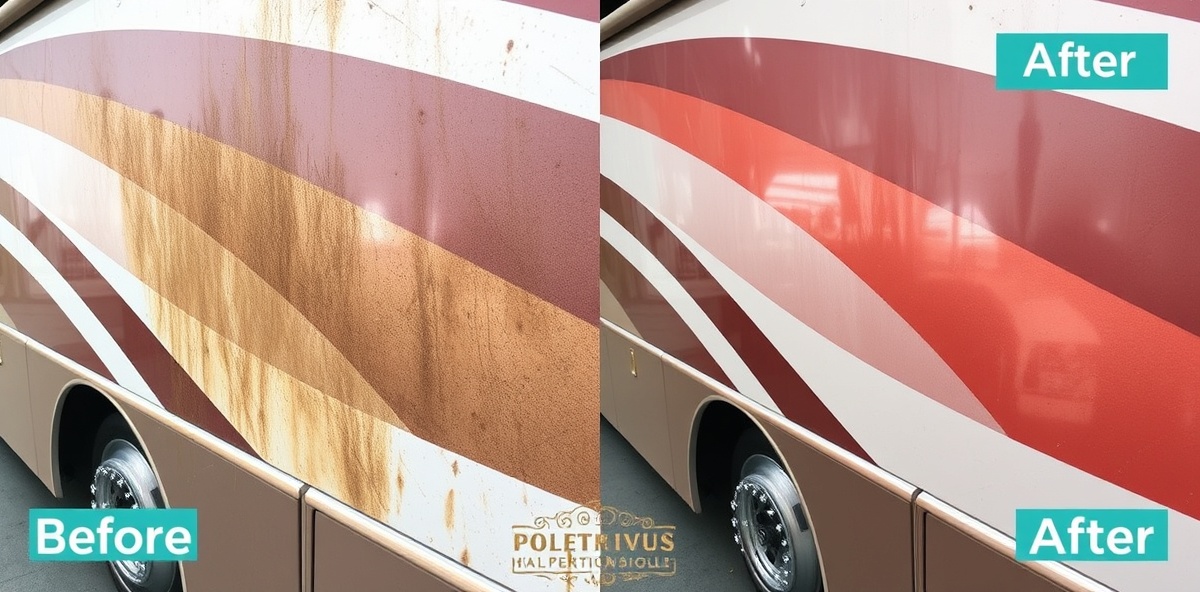
Professional restoration techniques to bring back your RV's original shine and protect it long-term.
RV oxidation is one of the most common problems RV owners face. Unlike cars that are regularly used and parked in garages, RVs sit outdoors exposed to relentless UV, weather, and environmental elements.
Oxidation is a chemical breakdown of the clear coat and paint caused by UV exposure and environmental contaminants. It appears as a chalky, dull, discolored finish.
The primary culprit. Extended sun exposure breaks down the clear coat and paint binders, causing oxidation and fading.
Water combines with UV damage to accelerate oxidation. Standing water causes spots and corrosion.
Coastal areas and areas with mineral-rich water accelerate oxidation significantly.
RVs without sealants or ceramic coatings are especially vulnerable to rapid oxidation.
RVs that aren't regularly detailed accumulate contaminants that accelerate oxidation.
RV oxidation ranges from light to severe, and treatment complexity depends on severity:
Paint appears slightly dull or hazy; some color fading visible.
Chalky, dull finish; visible whitish coating; significant color loss.
Extremely chalky; extensive color loss; paint appears faded or grayish.
Professional oxidation removal involves specialized techniques and equipment:
Professional washing with decontamination to remove dirt, salt, and bonded contaminants before polishing begins.
Removes bonded contaminants from paint surface, preparing it for polishing and restoring smoothness.
Progressive polishing stages using heavier compounds first, then finishing compounds. Removes oxidized paint layers to reveal fresh paint underneath.
Assessment of results to determine if additional polishing is needed or if paint is fully restored.
Application of ceramic coating, sealant, or protective product to prevent future oxidation and protect the restored paint.
Once you've invested in oxidation removal, prevent it from happening again:
Best long-term protection. Creates a protective barrier against UV and environmental damage. Lasts 3-5+ years with maintenance.
Cost: $1,500-$3,000+
Professional detailing every 2-3 months removes contaminants before they cause oxidation. This is essential maintenance.
Cost: $500-$1,000 per detail
RV cover or covered storage dramatically reduces UV and weather exposure, slowing oxidation by years.
Cost: $200-$500 for quality cover
Bi-weekly hand washing removes contaminants and salt air. Essential in coastal areas.
Cost: Time investment
Prevention Is More Cost-Effective Than Restoration
Spending $1,500-$2,500 on ceramic coating + regular maintenance ($500-$1,000 annually) is far cheaper than $2,500-$4,000 oxidation removal every few years. Invest in protection now to avoid expensive restoration later.
Eagle Star Detail specializes in professional RV oxidation removal and restoration. We bring your RV back to like-new condition.
Professional RV oxidation removal involves washing, clay bar decontamination, machine polishing with professional compounds, and application of protective sealant. Heavy oxidation may require multi-stage polishing. DIY methods exist but are time-consuming and less effective than professional restoration.
Yes, heavy oxidation can be removed through professional multi-stage polishing and restoration. The process removes oxidized clear coat layers to reveal fresh paint underneath. Severe cases may require 2-3 polishing stages and significant time investment.
RV oxidation removal typically costs $800-$3,000+ depending on severity, size, and number of polishing stages required. Light oxidation costs less; heavy oxidation costs significantly more due to labor and materials. Prevention through regular detailing is more cost-effective long-term.
RV oxidation is caused by UV exposure, weather exposure, moisture, salt air (especially coastal areas), lack of protective coatings, and infrequent maintenance. RVs are especially vulnerable because they're often parked outdoors for extended periods without protection.
Prevent RV oxidation through regular detailing (every 2-3 months), protective sealants or ceramic coatings, covered parking when possible, and prompt removal of contaminants. Ceramic coating is the best long-term prevention, reducing oxidation significantly.