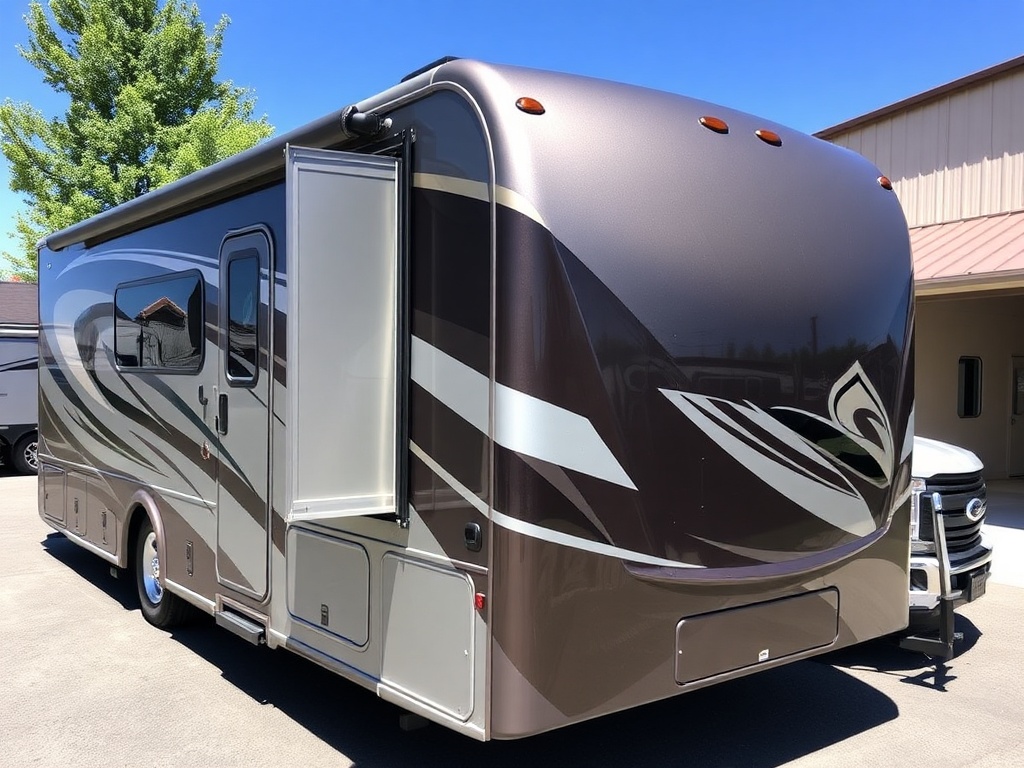
When it comes to protecting your vehicle’s paint, the choice between ceramic coating and traditional wax is one of the most important decisions you’ll make. Both offer protection, but they work very differently and have distinct advantages and drawbacks. This comprehensive guide compares ceramic coating and wax to help you choose the best protection for your Boise vehicle.
Understanding the Basics
What is Ceramic Coating?
Ceramic coating is a liquid polymer that chemically bonds to your vehicle’s clear coat, creating a permanent protective layer. The coating hardens into a glass-like surface that:
- Creates a permanent bond with the paint
- Provides hydrophobic (water-repelling) properties
- Offers protection against UV rays, chemical contaminants, and environmental hazards
- Lasts 5-10 years or longer with proper maintenance
- Can only be removed through professional polishing
What is Traditional Wax?
Traditional wax is a natural or synthetic product applied to the paint surface that creates a temporary protective layer. Wax:
- Sits on top of the clear coat (doesn’t bond)
- Provides water-beading and shine
- Offers basic UV and contaminant protection
- Lasts 4-12 weeks before degrading
- Can be easily removed with washing or wax remover
- Requires frequent reapplication
Side-by-Side Comparison Table
| Feature | Ceramic Coating | Traditional Wax |
|---|---|---|
| Bonding | Chemical bond (permanent) | Surface layer only |
| Durability | 5-10+ years | 4-12 weeks |
| Water Beading | Excellent (5-10 years) | Good (initially) |
| UV Protection | Excellent | Good (limited) |
| Gloss Enhancement | Excellent and lasting | Excellent (temporary) |
| Chemical Resistance | Excellent | Fair to Good |
| Scratch Resistance | Good to Excellent | Fair |
| Maintenance Cost | $50-150/year | $100-300/year |
| Application Cost | $500-2,000+ | $100-200 |
| Maintenance Difficulty | Easy (pH-neutral soap) | Easy (any car wash) |
| Reapplication Frequency | Rarely (5-10 years) | Every 4-12 weeks |
| Best for | Long-term protection | Temporary shine |
Durability Comparison: Which Lasts Longer?
Ceramic Coating Longevity
Ceramic coatings are built to last. A quality application provides:
- Initial durability: 2-5 years of excellent performance
- Extended durability: 5-10 years with proper maintenance
- Peak performance: Years 1-3 with best water beading and gloss
- Gradual decline: Slow degradation after year 5, still protective
- Warranty coverage: 3-10 year warranties from reputable manufacturers
With regular maintenance and annual professional refresh applications, ceramic coatings can provide 10+ years of protection.
Traditional Wax Durability
Traditional wax requires constant reapplication:
- Initial protection: 4-8 weeks on most vehicles
- Extended protection: Up to 12 weeks with high-quality products
- Climate dependent: Boise’s sun and heat reduce durability significantly
- Usage dependent: Frequent washing reduces longevity
- Needs reapplication: Every 4-12 weeks year-round
- No warranty: Wax cannot be warranted beyond initial application
In Boise’s high-altitude sun environment, traditional wax typically lasts 4-6 weeks before needing reapplication.
Cost Analysis: Initial Investment vs Long-Term Expenses
Ceramic Coating Total Cost of Ownership
Initial application: $500-2,000+ (professional installation)
- Preparation and paint correction: $300-1,500
- Ceramic coating application: $200-500
- Professional warranty and insurance: Included
Annual maintenance: $50-150
- Monthly DIY washes with pH-neutral soap
- Occasional professional maintenance spray application
- Annual professional refresh: $200-400 (optional, extends warranty)
5-year total cost: $750-2,750 10-year total cost: $950-3,950
Traditional Wax Total Cost of Ownership
Initial application: $100-200 (professional or DIY)
- Wax product: $15-40
- Professional application (optional): $75-150
Quarterly maintenance: $100-300
- Wax reapplication every 4-12 weeks: $25-75 each
- Professional applications: $50-150 each
- Wax products and supplies: $20-50 per application
5-year total cost: $1,300-1,900 (4-12 reapplications per year) 10-year total cost: $2,600-3,800
The Real Cost Picture
While ceramic coating has a higher upfront cost, the long-term expense comparison is striking:
- Over 5 years: Ceramic coating saves $550-1,150
- Over 10 years: Ceramic coating saves $1,650-1,850
- Break-even point: Typically 18-24 months
- Additional benefit: Ceramic coating increases resale value; wax doesn’t
Maintenance Requirements: Time and Effort
Ceramic Coating Maintenance
Ceramic coating maintenance is straightforward and minimal:
Weekly:
- 5-10 minutes inspecting for contaminants
- Park in shade when possible
- No special products needed
Every 2 weeks:
- 30-45 minute professional wash with pH-neutral soap
- Two-bucket washing method (protects the coating)
- Microfiber drying
- Optional: Ceramic maintenance spray
Monthly:
- Inspect for water spots or damage
- Professional maintenance wash (optional)
- 15 minutes for quick inspection
Annually:
- Optional professional ceramic refresh ($200-400)
- Paint correction if needed
- Warranty maintenance
Total time commitment: 2-3 hours per month
Traditional Wax Maintenance
Wax requires more frequent and labor-intensive care:
Every 4-12 weeks:
- Complete wax removal (30-60 minutes)
- Surface preparation and cleaning (30-45 minutes)
- New wax application (45-90 minutes)
- Buffing and polishing (30-60 minutes)
Weekly during summer:
- Regular washing (30-45 minutes)
- More frequent touch-ups due to Boise heat
Monthly:
- Check water beading and coverage
- Plan next application
Total time commitment: 4-10 hours per month (including reapplication cycles)
Protection Against Boise’s Environmental Challenges
Boise’s unique climate presents specific challenges that affect both coatings differently.
UV Exposure and High-Altitude Sun
Boise sits at 2,704 feet elevation with intense sun exposure:
Ceramic Coating:
- Excellent UV blocker for first 5-10 years
- Infrared reflection reduces heat transfer
- Protection doesn’t degrade quickly despite Boise’s altitude
- Annual refresh maintains optimal UV protection
Traditional Wax:
- Basic UV protection fades quickly
- Reapplication needed every 4-6 weeks in summer
- High-altitude sun significantly reduces durability
- Wax coating itself offers no infrared reflection
Winner: Ceramic coating excels in Boise’s harsh UV environment
Winter Road Salt and Contaminants
Boise winters bring road salt and mineral exposure:
Ceramic Coating:
- Superior chemical resistance prevents etching
- Hydrophobic surface sheds salt and contaminants
- Long-term protection against salt damage
- Professional maintenance removes salt deposits safely
Traditional Wax:
- Limited chemical resistance to road salt
- Wax can be stripped by road salt removal products
- Requires more frequent reapplication in winter
- Less protection against salt-induced oxidation
Winner: Ceramic coating significantly outperforms
Dust and Environmental Contaminants
Boise’s dry climate creates dust and contaminant challenges:
Ceramic Coating:
- Smooth surface repels dust accumulation
- Easier cleaning with pH-neutral soap
- Contaminants don’t bond to ceramic surface
- Professional cleaning removes embedded particles
Traditional Wax:
- Dust particles can embed in wax layer
- Requires more frequent washing to remove dust
- Buildup occurs over wax life cycle
- Dust removal often damages wax
Winner: Ceramic coating is superior for Boise’s dust conditions
Professional Application: Why It Matters
Ceramic Coating Application
Professional application is absolutely recommended for ceramic coatings:
Required preparation:
- Paint correction (removes swirl marks and oxidation)
- Deep cleaning and decontamination
- Surface profile creation for optimal bonding
- Clay bar treatment
- Chemical preparation of clear coat
Professional application process:
- Controlled environment (garage/facility)
- Multiple thin layers for even coverage
- 48-hour cure period in dry location
- Quality inspection and warranty activation
- Professional equipment ensures proper hardening
Cost justification: $500-2,000 investment ensures:
- 5-10 year protection vs DIY failure
- Warranty coverage ($3,000-5,000 protection)
- Proper bonding and longevity
- Optimal performance
Traditional Wax Application
Wax can be applied professionally or DIY:
Professional application ($50-150):
- Even coverage and application
- Proper buffing and polishing
- Advice on product selection
- Better initial results
DIY application ($15-40):
- Lower cost but requires technique
- Uneven application is common
- Risk of haze or streaking
- Learning curve for results
Benefits of professional wax:
- Better appearance
- More consistent results
- Longer-lasting application
- Expert product recommendations
Which is Better for Your Boise Vehicle?
Choose Ceramic Coating If You:
✓ Want 5-10 year protection with minimal maintenance ✓ Live in Boise and want to handle harsh UV and salt exposure ✓ Drive frequently and want long-term peace of mind ✓ Prefer consistent protection without reapplication ✓ Plan to keep your vehicle long-term ✓ Want the best resale value protection ✓ Are willing to invest upfront for long-term savings ✓ Don’t want to reapply protection every few weeks ✓ Value professional-grade protection
Choose Traditional Wax If You:
✓ Want to test protection before major investment ✓ Are selling your vehicle within 1-2 years ✓ Prefer lower initial cost ✓ Don’t mind frequent reapplication ✓ Are comfortable with DIY application ✓ Want simplicity without specialized maintenance ✓ Have a vehicle that doesn’t need long-term protection ✓ Enjoy the monthly maintenance routine
Hybrid Approach: The Best of Both Worlds
Many Boise vehicle owners use a hybrid strategy:
Hybrid Protection Plan:
- Apply ceramic coating for base 5-10 year protection
- Use wax overlay monthly for extra shine (optional)
- Maintain with pH-neutral soap weekly
- Apply ceramic maintenance spray every 2 weeks
- Professional refresh annually
Hybrid advantages:
- Enhanced gloss from wax on top of ceramic
- Extra protection layer from wax
- Extended ceramic coating life
- Premium appearance
- Reasonable maintenance schedule
Hybrid disadvantages:
- Ceramic coating performance may be slightly reduced
- Wax adds monthly maintenance cost ($20-30)
- More complex application process
- Not ideal for showroom vehicles
Long-Term Performance: Real-World Results
Ceramic Coating Performance Over Time
Year 1: Peak performance with excellent water beading, maximum gloss, superior protection
Years 2-3: Slight reduction in water beading; gloss remains excellent; protection remains strong
Years 4-5: More noticeable water beading reduction; gloss diminishes slightly; protection still strong
Years 5-7: Annual refresh maintains warranty; protection remains good to excellent; gloss maintained
Years 7-10: Regular maintenance extends life; still provides significant protection; refresh every 1-2 years recommended
Traditional Wax Performance Over Time
Weeks 1-2: Maximum gloss and water beading; best appearance
Weeks 3-6: Water beading remains good; slight gloss reduction; adequate protection
Weeks 7-10: Noticeable reduction in beading; gloss fading; declining protection
Weeks 11-12: Minimal protection; water no longer beads; must reapply
Pattern repeats: Every 4-12 weeks, entire cycle restarts
Making Your Decision: Ceramic Coating vs Wax
Cost-Benefit Analysis
For most Boise vehicle owners, ceramic coating is the superior choice:
- Lower 10-year cost: Saves $1,650-1,850 vs wax
- Less maintenance: 2-3 hours monthly vs 4-10 hours
- Better protection: 5-10 years vs 4-12 weeks
- Increased resale value: Buyers value ceramic protection
- Peace of mind: Set it and forget it protection
- Boise-specific advantage: Handles UV and salt superior to wax
Special Circumstances
Choose wax if:
- You’re selling vehicle in 6-12 months (don’t need long-term)
- You have extremely limited budget for initial cost
- You enjoy the monthly maintenance routine
- You’re uncertain about ceramic coating on your vehicle type
Stick with ceramic coating if:
- You’re keeping vehicle 5+ years (typical vehicle ownership)
- You experience Boise’s harsh UV and winter conditions
- You want minimal maintenance and maximum protection
- You want the best resale value
FAQ: Ceramic Coating vs Wax
Q: Can I apply wax over ceramic coating? A: Yes, you can for extra gloss, but it’s not recommended as it may slightly interfere with the ceramic coating’s hydrophobic properties.
Q: How often do I need to reapply ceramic coating? A: Quality coatings last 5-10 years with proper maintenance. Annual professional refresh is optional but recommended to maintain warranty.
Q: Is ceramic coating safe to apply myself? A: Not recommended. Professional preparation and application ensure proper bonding and warranty coverage.
Q: Can I use regular soap with ceramic coating? A: No. Use only pH-neutral ceramic coating soap to avoid damaging the coating.
Q: Why is ceramic coating so much more expensive? A: The longevity, protection level, and durability justify the investment. Break-even occurs in 18-24 months.
Q: Will ceramic coating protect against rock chips? A: Not completely, but it provides some protection. Severe impacts will still damage paint underneath.
Q: Does Boise’s climate make ceramic coating wear out faster? A: No. Ceramic coating actually outperforms in Boise’s high-altitude sun and winter conditions.
Professional Application at Eagle Star Detail
The choice between ceramic coating and wax doesn’t have to be difficult. At Eagle Star Detail, our experts can:
- Assess your vehicle’s condition and determine ideal protection
- Explain ceramic coating vs wax for your specific needs and climate
- Apply professional ceramic coating with warranty coverage
- Provide maintenance guidance for long-term protection
- Offer annual refresh services to extend coating life
- Service all of Boise and surrounding areas
Whether you choose ceramic coating for long-term protection or traditional wax for temporary shine, professional application ensures optimal results and performance.
Ready to protect your Boise vehicle? Contact Eagle Star Detail today for a free consultation on ceramic coating vs wax and discover which protection is best for your needs.
About the Author
David Faustina
Founder & Certified Ceramic Coating Installer
David Faustina is a professionally trained and certified detailer specializing in paint correction, ceramic coating installation, and RV detailing. As founder of Eagle Star Detail, he personally works on every vehicle to ensure premium results and customer satisfaction.
Ready to experience professional detailing?
Eagle Star Detail specializes in professional mobile detailing throughout Boise and the Treasure Valley.