Your RV or vehicle is a significant investment, and protecting its finish is one of the smartest decisions you can make as an owner. With so many coating options on the market, choosing the right one can feel overwhelming, especially if you are new to the world of automotive protection. Two of the most popular choices you will encounter are powder coating and ceramic coating, and understanding the difference between them could save you both time and money.
In this guide, we will break down exactly what each coating method involves, how they compare in terms of durability, cost, application, and best use cases, and which one might be the right fit for your specific needs. Whether you are looking to protect your RV’s metal components, refresh your vehicle’s wheels, or shield an entire auto body, this comparison will give you a clear and confident starting point. By the end, you will have a solid understanding of both options and feel equipped to make an informed decision without second-guessing yourself.
What Is Powder Coating? The Metal Armor Explained
Powder coating is a dry finishing process that transforms bare metal into a heavily armored, corrosion-resistant surface built to last decades. Unlike traditional liquid paint, which relies on solvents that evaporate as the coating dries, powder coating uses finely ground particles of pigment and resin that are applied in a completely dry state. The result is a finish that bonds directly to the metal substrate, forming a hard, uniform shell with significantly greater thickness and resilience than conventional paint can achieve in a single application. For vehicle and RV owners, understanding this process is the foundation for making smarter decisions about how to protect the components that take the most punishment on the road.
How the Two-Stage Process Works
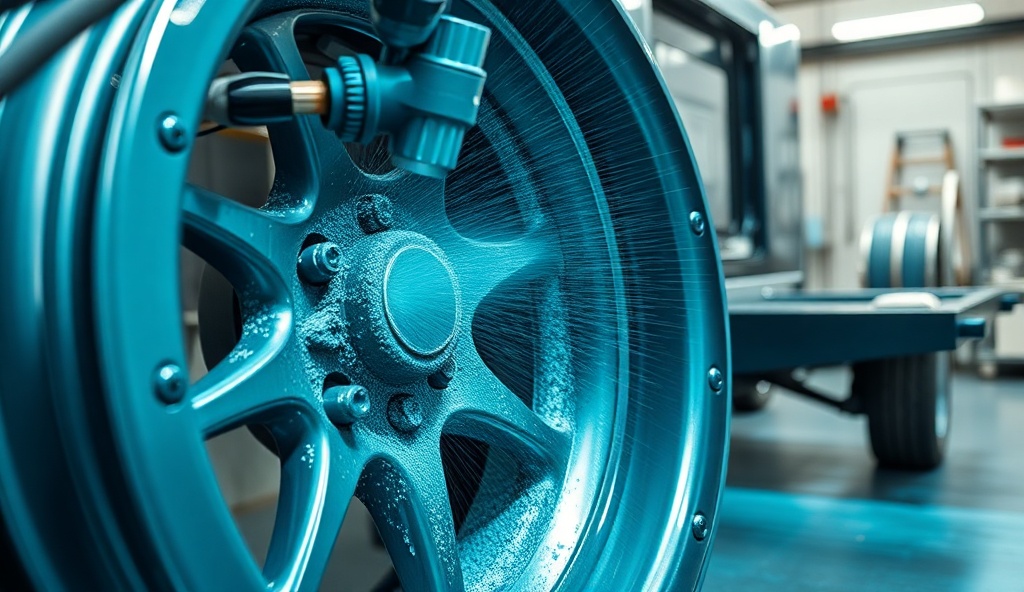
The application begins with electrostatic spray deposition. A specialized spray gun imparts an electrostatic charge to the dry powder particles as compressed air propels them toward the grounded metal part. Because opposites attract, the charged powder clings evenly and consistently to the entire surface, including edges and recessed areas that liquid paint often misses. Critically, proper surface preparation, including degreasing, cleaning, and sometimes abrasive blasting, must happen before any powder is applied. Poor prep is the leading cause of premature coating failure, so professional applicators treat this step with serious attention.
Once coated, the part moves into an industrial oven for the second stage: heat curing at 350 to 400 degrees Fahrenheit. At this temperature, the powder melts, flows across the surface, and chemically cross-links into a smooth, durable film. The entire curing cycle typically completes in under 25 minutes, depending on part size and powder type. The Powder Coating Institute describes this cured finish as one of the most durable surface coatings available for metal, and the science supports that claim.
Where Powder Coating Performs Best
Powder coating is purpose-built for metal components exposed to constant stress, moisture, road debris, and temperature swings. On RVs and trailers specifically, it is applied to chassis frames, trailer hitches, wheels and rims, control arms, brackets, skid plates, and underbody structural parts. These are exactly the areas most vulnerable to rust, chipping, and corrosion from road salt, gravel impact, and extended outdoor exposure. According to Wikipedia’s overview of powder coating, the process has been trusted for demanding industrial and automotive applications across North America since the 1960s, a track record that speaks directly to its suitability for the rigors of RV and trailer use.
Real-World Durability and Industry Proof Points
When properly applied over well-prepared metal, powder-coated RV frames and trailer undercarriages routinely deliver 15 to 20-plus years of service life with appropriate care such as periodic cleaning and prompt attention to any chips or scratches that expose raw metal. That longevity far exceeds what standard liquid paint provides in the same harsh conditions.
The RV manufacturing industry has taken notice. Lippert Components, one of the largest suppliers of RV chassis and structural systems in North America, developed its “Road Defense” advanced powder coating technology in collaboration with AkzoNobel. Deployed across major production facilities, this system delivers more uniform coating density for enhanced resistance to corrosion, humidity, weathering, fading, and road impacts. The fact that a manufacturer of Lippert’s scale invested in proprietary powder coating technology underscores how seriously the RV and trailer industry treats this finishing method as a long-term durability solution, not merely an aesthetic one.
What Is Ceramic Coating? The Paint Protection Force Field
Where powder coating builds thick armor through heat and fusion, ceramic coating works at an entirely different level, forming an invisible force field through chemistry rather than fire.
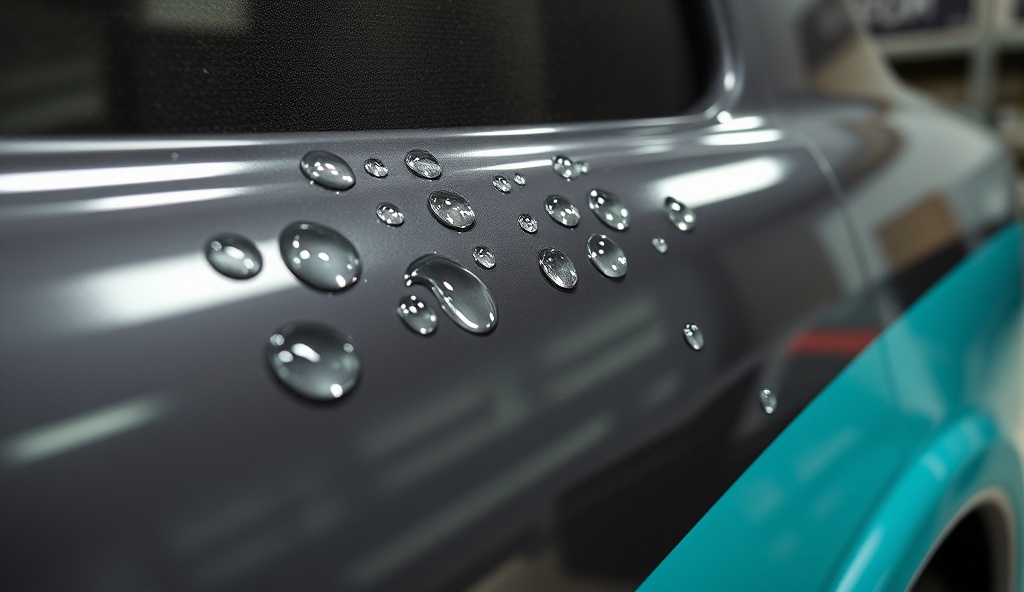
Ceramic coating is a liquid polymer, primarily composed of silicon dioxide (SiO₂), that is applied by hand to a vehicle’s surfaces and then cures into a quartz-like, glass-hard protective shell. Unlike powder coating, which relies on thermal melting and fusion inside an industrial oven, ceramic coating bonds through a covalent chemical reaction that integrates with the substrate at a nano level. No heat gun, no oven, no melting required. The coating becomes part of the surface itself, creating a semi-permanent layer that cannot simply be washed or wiped away.
How the Bonding Mechanism Works
This distinction in bonding is critical for beginners to understand. Powder coating fuses mechanically through heat, building a thick layer on top of metal. Ceramic coating, by contrast, forms molecular-level covalent bonds that integrate directly with the clear coat, gel coat, glass, or trim surface beneath it. The result is a coating measured in nanometers rather than millimeters, yet one that dramatically outperforms traditional waxes and sealants, which simply sit on the surface and degrade within weeks or months.
What Surfaces Does Ceramic Coating Protect?
Ceramic coating’s versatility is one of its most compelling advantages. A single certified application can protect painted body panels, gel coat on RV sidewalls, windshields and windows, headlights, taillights, wheels with a painted or clear-coated finish, and plastic trim pieces. For RV owners, this is particularly significant. Gel coat is highly vulnerable to UV oxidation, chalking, and environmental staining, and ceramic coating provides proven protection against all three, keeping RV sidewalls glossy and easier to clean season after season.
System X Certified Options Through Eagle Star Detail
Eagle Star Detail is a certified installer of System X ceramic coatings, a USA-manufactured professional product line trusted across automotive, marine, and RV applications. System X offers tiered packages designed to meet different protection goals, with warranty options ranging from several years up to lifetime coverage for qualifying installations. Higher-tier packages deliver permanent-level hardness, chemical resistance, and hydrophobicity, with CARFAX registration available to support resale value. For customers who want protection they never have to think about again, a lifetime-warranted System X installation is the definitive solution.
Heat Resistance You Would Not Expect
One surprising advantage of high-performance ceramic coatings is their exceptional heat resistance. Industrial-grade formulations can withstand temperatures up to approximately 1,800 degrees Fahrenheit, making ceramic coating suitable for exhaust-adjacent surfaces, engine bay components, and high-UV environments where ordinary coatings would fail or discolor. For daily drivers and RVs parked in the Idaho sun, this thermal stability translates directly into longer-lasting protection and preserved gloss even under extreme conditions.
Powder Coating vs. Ceramic Coating: Side-by-Side Breakdown
Now that you understand what each technology does on its own, placing them side by side reveals just how different these two “coatings” truly are. Despite sharing a common word, powder coating and ceramic coating operate through entirely different chemistry, on different surfaces, and for entirely different protective purposes. This is the single most important point for any vehicle or RV owner to grasp before making a protection decision.
The Thickness Gap Tells the Story
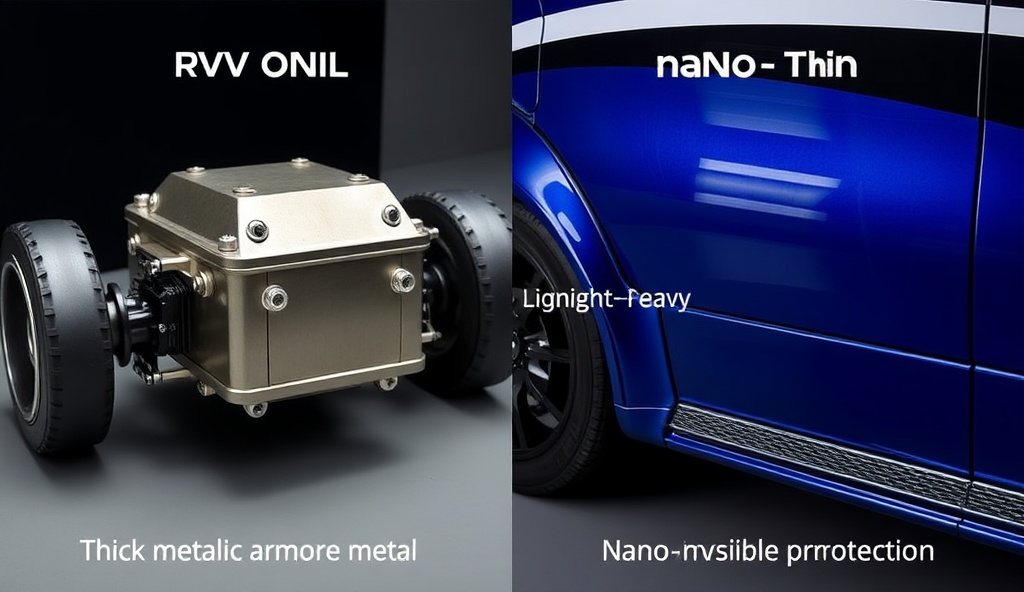
Start with the numbers. Powder coating is typically applied at 2 to 10 mils thick, which translates to roughly 50 to 250 microns of solid, fused polymer built directly onto metal. Ceramic coating, by contrast, sits at approximately 1 to 3 microns in thickness, a layer so thin it is invisible to the naked eye. That difference is not a flaw in ceramic coating; it reflects an entirely different purpose. The thick powder layer creates a structural barrier against impacts, chips, abrasion, and corrosion. The ultra-thin ceramic layer chemically bonds to paint or clear coat to enhance surface properties like hydrophobicity, gloss, and UV resistance without altering dimensions or tolerances at all. Both thicknesses are exactly right for what each coating is designed to do.
Six-Dimension Comparison at a Glance
| Dimension | Powder Coating | Ceramic Coating |
|---|---|---|
| Process | Electrostatically applied dry powder, heat-cured in industrial oven (350-425°F) | Liquid polymer applied by hand, cures at ambient temperature or with mild heat |
| Surface Compatibility | Bare metal (steel, aluminum, frames, wheels, chassis) | Painted surfaces, clear coat, glass, trim, wheels with topcoat |
| Durability Lifespan | 15-20+ years with routine care | 2-5 years typical; premium packages warrant longer with proper maintenance |
| Heat Resistance | 200-400°F before degradation | Up to 1,800°F for industrial-grade formulations |
| Cost Range | $400-$800 for a set of four wheels | $300-several thousand depending on vehicle size and warranty tier |
| Best-Fit Use Cases | Wheels, frames, bumpers, trailer chassis, bare metal components | Painted body panels, RV exteriors, windows, trim, protected surfaces |
DIY Accessibility and the Professional Difference
Powder coating is simply not accessible to most consumers as a DIY project. It requires commercial-grade electrostatic spray equipment and a dedicated industrial oven large enough to accommodate the parts being coated. Attempting this at home with a repurposed kitchen oven is not only impractical for anything larger than a small bracket but potentially dangerous. Professional ceramic coating application, by contrast, requires no specialized high-heat facility. What it does demand is meticulous surface preparation, including paint decontamination, polishing, and precise application technique. That is why certified installers consistently deliver results that far outperform consumer kit attempts, and why warranty coverage typically requires professional installation from a qualified applicator.
When Should You Use Each? Real RV and Auto Scenarios
Understanding the theory behind each coating is useful, but the real clarity comes from matching the right protection to the right surface on your specific vehicle. Here is how that plays out across the most common real-world scenarios.
Motorhome Owners
A Class A or Class C motorhome presents two completely different protection challenges on the same vehicle. The exterior sidewalls, roof, and cap are finished surfaces, typically painted or gel-coated, and they face relentless UV exposure, oxidation, and road contamination across thousands of miles. These surfaces need ceramic coating. A professionally applied ceramic coating bonds chemically to the gel-coat or painted finish, creating a hydrophobic, UV-resistant barrier that prevents the chalking and fading that plague unprotected motorhomes within just a few seasons. According to 3 key advantages of ceramic coating for your RV, ceramic protection significantly reduces oxidation while making routine cleaning far easier after travel days.
The chassis and hitch receiver, however, are bare metal structures that absorb road salt, moisture, and debris at highway speeds. Those components need powder coating, not ceramic. A qualified powder coater will blast the metal clean and apply a thick, fused finish that resists corrosion for 15 to 20 years or more. Both treatments can be scheduled during the same service window, protecting the entire vehicle without compromise.
Toy Hauler and Travel Trailer Owners
Toy haulers and travel trailers take serious mechanical abuse on their undercarriages. The ramp door hardware, frame rails, and axle components flex under load, collect road debris, and sit exposed to moisture during storage. Powder coating is the correct choice for all of these metal parts. The thick, impact-resistant finish handles the punishment that would chip or peel traditional paint within a single season.
The exterior painted or decal-adjacent surfaces tell a different story. These areas are vulnerable to UV fade and chalking, especially on units stored outdoors between trips. Ceramic coating on the exterior panels, applied carefully around decals and graphics, provides long-term UV and oxidation resistance that wax simply cannot match for more than a few weeks. This comparison of ceramic coating vs. powder coating reinforces that ceramic is the superior choice for finished surfaces requiring hydrophobic and UV-blocking performance.
Daily Drivers and Truck Owners
Truck and daily driver owners benefit from the same layered strategy at a smaller scale. Bare or media-blasted wheels should go to a powder coater before any finishing work. Powder coating delivers a hard, uniform shell that resists road chips, brake dust corrosion, and salt exposure far better than painted alternatives. Once the structural metal is protected, ceramic coating applied over any painted or clear-coated wheel faces and all body panels provides the gloss retention and easy-wash hydrophobicity that makes routine maintenance practical.
New RV Purchase Scenario
If you have just purchased a new RV, resist the urge to coat everything immediately. Use the first season to observe how the frame and undercarriage hold up under actual road and weather conditions. Inspect for rust, bare spots, or areas where factory coatings are thinning. Before winter storage, schedule powder coating on any exposed or compromised metal components. Then, ahead of the following spring season, bring the unit in for ceramic coating on all painted and gel-coated exterior surfaces. This phased approach, described by Tiffin Motorhomes in their ceramic coating guide, aligns protection schedules with peak exposure risks and gives each coating the ideal conditions for adhesion and long-term performance.
Where Powder Coating Alone Falls Short
It is worth stating clearly: powder coating cannot do what ceramic coating does on finished surfaces, and attempting to force it onto painted, gel-coated, or clear-coated panels would require abrasive or heat-based preparation that destroys the finish underneath. Any surface that needs UV protection, hydrophobicity, or gloss enhancement requires ceramic coating applied by a certified professional. These are not competing products competing for the same job. They are purpose-built solutions for fundamentally different substrates, and using them together is what delivers complete, long-lasting vehicle protection.
Can You Use Powder Coating and Ceramic Coating Together?
The short answer is yes, and not only can you use them together, you absolutely should if you want the most complete protection possible for your RV or vehicle. Powder coating and ceramic coating are complementary technologies that target entirely different zones, meaning they work in parallel rather than competing for the same surface. Think of it as a coordinated defense system: one technology fortifies the structural skeleton while the other shields the visible exterior. When deployed together on the same vehicle, they eliminate the protection gaps that either technology would leave on its own.
The Right Order Matters
Getting the sequence right is essential, and the rule is straightforward: powder coating always comes first. Any bare metal work on frames, chassis components, suspension parts, or wheels needs to be completed and fully cured before paint correction or ceramic coating begins on the painted surfaces. This matters because powder coating requires high-temperature oven curing that has no place near finished paint or a freshly installed ceramic layer. Once the powder-coated components have cooled and cured completely, the ceramic coating process can proceed on the painted bodywork without any risk of chemical interference, heat damage, or contamination. Following this sequence keeps both processes clean, effective, and independent of each other.
The Hybrid Protection Model for Full Coverage
Picture a fully protected travel trailer or motorhome built around this hybrid approach. The powder-coated frame and chassis handle corrosion from road salt, moisture, and impact damage at the structural level, where a paint-based coating would simply not hold up. Meanwhile, ceramic coating applied to the sidewalls and roof creates a hydrophobic, UV-resistant barrier that fights oxidation, water intrusion, and environmental staining on every finished painted or gel coat surface. Together, these overlapping protection zones cover the vehicle from the ground up, addressing mechanical toughness at the base and surface-level defense at the top. RV owners who invest in both technologies are essentially building multi-layer armor that extends the life of every component simultaneously.
It is also worth knowing that ceramic coating can be applied directly over a powder-coated surface that includes a clear coat or topcoat layer, which is common on finished wheels. Adding ceramic over a clear-coated powder finish delivers improved hydrophobicity, easier brake dust removal, extra gloss, and UV protection without disrupting the powder layer underneath. Detailing forum discussions confirm this compatibility, provided the powder has fully cured and the surface is properly prepped before application.
How Eagle Star Detail Fits Into Your Complete Strategy
Eagle Star Detail specializes in mobile ceramic coating installation and paint correction for vehicles and RVs throughout the Treasure Valley. While powder coating on frames and bare metal components falls outside that scope, Eagle Star Detail can point clients toward reputable local powder coating shops for that foundational metalwork. The result is a coordinated protection plan where the right professionals handle the right surfaces, and every zone of your vehicle is covered. If you are planning a full protection build on your RV or tow vehicle, Eagle Star Detail is the starting point for building that strategy with expert guidance from the ceramic coating side of the equation.
Why Eagle, Idaho Vehicle Owners Should Prioritize Both
Living in Eagle, Idaho means your vehicles and RVs face a uniquely punishing combination of environmental stressors that most of the country never experiences at the same intensity. The Treasure Valley sits at high-desert elevation, delivering more than 200 sunny days per year with UV radiation that grows measurably stronger the higher you climb. Summer temperatures routinely push past 100°F, while winter temperatures swing hard in the opposite direction, regularly dropping below freezing and sometimes reaching single digits. This extreme seasonal range creates constant expansion and contraction cycles in metal, paint, and gel coat that quietly accelerate surface breakdown every single year.
The UV Threat Is Faster Than Most Owners Expect
An Idaho summer can visibly age an unprotected RV in a matter of months. UV radiation at Treasure Valley elevations breaks down the resins in fiberglass gel coat, causing chalking, fading, and a dull oxidized surface that grows progressively harder to restore. Traditional waxes and sealants offer almost no meaningful defense here; they typically break down within four to eight weeks under sustained high-desert sun exposure, leaving gel coat completely vulnerable through the longest stretch of the driving season. A single summer of outdoor storage or regular highway use on routes like I-84 can push a gel coat surface to the point where professional oxidation restoration becomes necessary, a service that commonly costs several hundred to over a thousand dollars depending on severity. Ceramic coating applied to RV exteriors and painted vehicle surfaces creates a chemically bonded barrier that reflects UV rays, resists oxidation, and maintains gloss across multiple seasons rather than multiple weeks.
Winter Road Chemicals Attack from Underneath
While summer UV works on your exterior, winter works on your undercarriage. The Ada County Highway District and Idaho Transportation Department apply magnesium chloride, sodium chloride brine, and abrasive sand to roads throughout the Boise-Eagle corridor every winter season. These chloride-based treatments are highly effective for driver safety, but they are equally effective at penetrating unprotected metal surfaces on frames, chassis, wheel components, and suspension parts. Chlorides attract and hold moisture against bare metal even after roads dry, and the repeated freeze-thaw cycles common to Treasure Valley winters accelerate electrochemical corrosion. De-icing chemicals contribute to an estimated $3 billion in annual vehicle rust repairs across the United States. Powder-coated chassis and frame components carry a fused, impact-resistant barrier that standard paint simply cannot match against this level of sustained chemical exposure.
The Cost Math Strongly Favors Prevention
Proactive protection is not an expense; it is straightforward financial logic for anyone planning to own their vehicle or RV for more than a few years. Preventing a single professional oxidation restoration or a structural frame corrosion repair through upfront coating investment typically saves owners two to five times the original cost of the protection itself, when you factor in the repair bill, the downtime, and the reduction in resale value that comes from visible surface or structural deterioration.
Eagle Star Detail Knows This Environment
Eagle Star Detail is based right here in Eagle, Idaho, and serves vehicle owners throughout the Eagle Road corridor and the broader Treasure Valley. That local presence matters because a certified installer who works in this specific climate every day understands exactly how summer UV, winter chlorides, and temperature extremes compound against each other on your vehicle. As a mobile, System X certified ceramic coating installer, Eagle Star Detail brings professional-grade protection directly to your location, whether you own a car, a motorhome, a toy hauler, or a travel trailer. With lifetime warranty options available through System X, the investment is designed to last as long as you own the vehicle, making it one of the most cost-effective decisions an Eagle or Boise-area owner can make.
Frequently Asked Questions About Powder Coating and Ceramic Coating
Is powder coating the same as ceramic coating?
No, and this is one of the most common points of confusion for beginners. Powder coating is a heat-cured, dry finishing process applied to bare metal for thick, impact-resistant corrosion protection. Ceramic coating is a chemically bonded, nano-thin liquid layer applied over finished painted or coated surfaces to add hydrophobicity, UV resistance, and gloss. They serve fundamentally different surfaces, solve different problems, and operate through entirely different chemistry. The only thing they truly share is the word “coating.”
Can you apply ceramic coating over powder coating?
Yes, and it is actually an excellent combination. When a powder-coated surface includes a clear topcoat layer, a ceramic coating can be applied on top to add hydrophobicity and UV resistance that powder coating alone does not provide. The result is a layered defense system: powder coating handles the heavy-duty corrosion and impact protection at the base, while the ceramic layer on top keeps surfaces cleaner, shinier, and more resistant to sun damage. This approach is increasingly popular on powder-coated wheels and RV components that owners want to maintain with minimal effort.
How long does powder coating last on an RV frame?
With proper surface preparation, including sandblasting down to bare metal, and professional application, powder coating on RV frames and trailer undercarriages typically lasts 15 to 20-plus years before showing significant wear. Application thickness matters considerably; well-executed jobs often reach 9 to 11 mils of coverage, creating a robust barrier against road salt, moisture, and stone chips. Ceramic coating, by comparison, is typically rated for around 5 years on painted surfaces, which highlights why each technology belongs in its own category of protection.
Does ceramic coating protect bare metal from rust?
No. Ceramic coating is not designed to replace powder coating on structural bare metal. While it creates a hydrophobic barrier that slows moisture access, it is too thin and too vulnerable to mechanical abrasion to serve as primary corrosion protection on a frame or undercarriage. For bare steel components, powder coating is the correct first line of defense.
Where can I get powder coating done near Eagle, Idaho?
The Treasure Valley area has several powder coating specialists equipped to handle automotive and RV components. Eagle Star Detail works within this local ecosystem and can point clients toward trusted powder coating resources while handling all ceramic coating installation as part of a complete vehicle protection plan. Contact us directly and we will help you map out the right sequence for your specific project.
The Bottom Line on Powder Coating and Ceramic Coating
Powder coating and ceramic coating are not rivals. They solve different problems on different surfaces, and the smartest vehicle and RV owners treat them as partners in a complete protection strategy. Powder coating handles the heavy metal work: frames, chassis components, wheels, and suspension parts that take the worst mechanical and corrosive punishment. Ceramic coating handles the visible, finished surfaces: paint, gelcoat, glass, and trim that need UV defense, hydrophobicity, and lasting gloss.
Eagle Star Detail’s expertise sits firmly on the paint protection side of that equation. As a certified System X installer offering lifetime warranty options, Eagle Star Detail brings professional-grade ceramic coating directly to you through mobile service across the Eagle Road corridor and the broader Treasure Valley. No shop drop-off, no complicated scheduling, just premium protection delivered to your driveway.
If you are ready to assess your vehicle’s current condition and map out a complete surface protection plan, a ceramic coating consultation is the right first step. Eagle Star Detail will evaluate your paint or gelcoat, identify what needs attention, and help you build a strategy that covers every zone properly.
Conclusion
Choosing between powder coating and ceramic coating does not have to be complicated. To recap the key takeaways: powder coating excels at protecting metal components with a durable, long-lasting finish, while ceramic coating is the superior choice for preserving painted surfaces and enhancing gloss. Cost and application complexity differ significantly between the two, and the best option ultimately depends on the specific part of your RV or vehicle you want to protect.
Now that you understand the strengths of each method, it is time to take action. Assess your vehicle’s needs, set a realistic budget, and consult with a professional coating specialist to get personalized recommendations. Your RV or auto represents a serious investment, and the right protective coating will keep it looking its best for years to come. Take that first step today and protect what matters most.
About the Author
David Faustina
Founder & Certified Ceramic Coating Installer
David Faustina is a professionally trained and certified detailer specializing in paint correction, ceramic coating installation, and RV detailing. As founder of Eagle Star Detail, he personally works on every vehicle to ensure premium results and customer satisfaction.
Ready to experience professional detailing?
Eagle Star Detail specializes in professional mobile detailing throughout Boise and the Treasure Valley.