Your boat deserves to look as impressive on the water as it performs. Whether you’ve just returned from a long season on Lake Lowell or you’re preparing for summer adventures ahead, maintaining a polished, protected finish is one of the most important investments you can make as a boat owner. Yet finding reliable, skilled professionals for boat polishing near me is a challenge many Eagle, Idaho residents know all too well.
The good news is that professional boat polishing services in the Eagle area are more accessible than you might think, and the results they deliver go far beyond simple aesthetics. A proper polish protects your vessel’s gel coat or paint from UV damage, oxidation, and the harsh effects of regular water exposure.
In this guide, we’ve put together a carefully curated list of what to look for in a quality boat polishing service near Eagle, Idaho. From understanding the different polishing techniques to knowing the right questions to ask a detailer, you’ll walk away with everything you need to make a confident, informed decision for your boat.
What Is Boat Polishing and Why Does Your Hull Need It
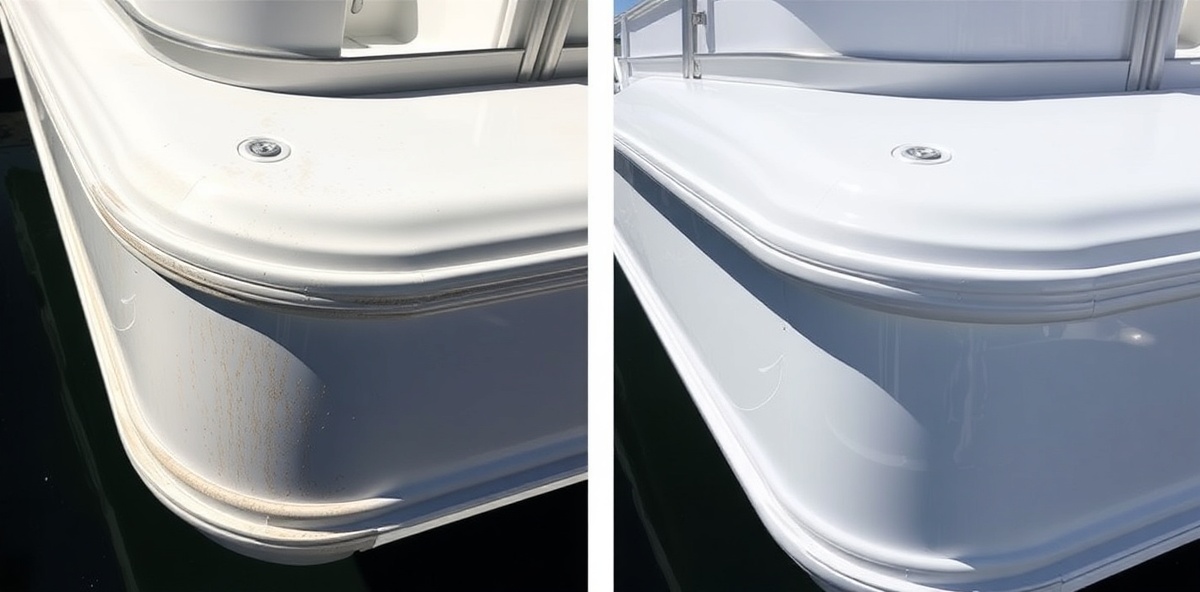
Boat polishing is the process of restoring and protecting a fiberglass hull’s gelcoat, the durable outer resin layer that gives your boat its color, gloss, and resistance to the elements. Over time, UV radiation breaks down the molecular bonds in gelcoat, creating a porous, degraded surface that appears chalky, faded, and rough to the touch. Mineral deposits from hard or alkaline water accelerate this damage, etching into the softened surface and dulling the finish further. Prolonged water contact compounds the problem by allowing moisture to penetrate the weakened gelcoat layer. New boats can show visible oxidation in as little as two to three years without consistent protection, making early intervention critical.
Understanding the difference between compounding and polishing helps you choose the right treatment for your hull’s condition. Compounding uses aggressive abrasives to cut away deeply oxidized material, scratches, and stains, revealing fresher gelcoat underneath. Polishing follows with finer abrasives to refine the surface, eliminate swirl marks left by compounding, and restore a smooth, high-gloss finish. Both steps are typically followed by a protective sealant or ceramic coating to lock in results and slow future oxidation.
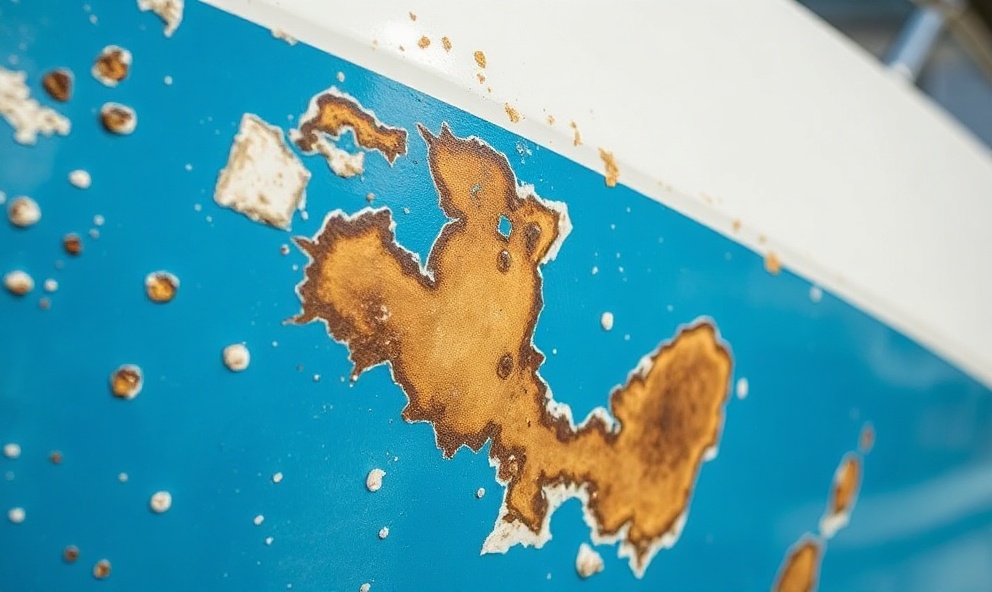
Neglecting oxidation is a costly mistake. As the gelcoat becomes increasingly porous, water infiltrates the underlying fiberglass, leading to osmotic blistering, structural cracking, and potential gelcoat failure. Routine annual polishing and protection may cost $500 to $1,500, while advanced restoration involving wet sanding or full re-gelcoating can run $4,000 to $15,000 or more.
For Idaho boaters frequenting Lucky Peak Reservoir and Lake Lowell, these risks are amplified. Idaho’s intense high-desert sun delivers relentless UV exposure, while the alkaline, mineral-rich water conditions common to Western reservoirs accelerate surface etching and deposit buildup. Seasonal algae activity at Lake Lowell adds further surface fouling to an already demanding environment, making regular professional polishing a smart investment rather than an optional luxury.
Boat Polishing Services: What Is Included at Every Level
Not all boat polishing services are created equal. Understanding the three primary service tiers helps you match your boat’s actual condition to the right level of work, avoiding both overpaying for unnecessary correction and underpaying for a result that won’t last.
Tier 1: Wash, Prep, Light Polish, and Wax Sealant
This entry-level package is designed for boats in generally good condition with only light surface oxidation, minor swirls, or water spotting. The process begins with a thorough hand or pressure wash, scum line removal, and non-skid deck scrubbing, followed by a single-stage polish to address minor imperfections. A synthetic wax sealant is then applied to seal the gelcoat and provide UV protection. This tier is ideal for well-maintained boats receiving regular seasonal care, and boat detailing cost breakdowns consistently show it as the most affordable entry point, typically starting around $24 per foot depending on boat size and condition.
Tier 2: Multi-Stage Compounding, Polishing, and Synthetic Sealant
When a hull shows visible chalkiness, moderate to heavy oxidation, swirl patterns, or water spot etching, a single-stage polish simply will not restore the gelcoat to its original clarity. Tier 2 services deploy machine-applied compounding and multi-step polishing, moving from heavier cut compounds down to finer finishing polishes, to systematically remove oxidation layers and surface defects. The process concludes with a premium synthetic sealant that outlasts traditional wax. According to average boat detailing pricing data, this mid-tier restoration work typically runs $30 to $40 or more per foot, reflecting the additional labor and product stages involved.
Tier 3: Full Multi-Stage Correction with System X Ceramic Coating
For heavily oxidized or neglected hulls, Tier 3 delivers the most comprehensive result available. Full multi-stage correction, sometimes including wet sanding for severe cases, restores the gelcoat to maximum clarity before a professional-grade ceramic coating like System X is applied. The difference in protection is significant: traditional wax lasts just 2 to 6 months, while ceramic coatings deliver 1 to 3 or more years of hydrophobic, UV-resistant protection. Pricing for this premium level starts at approximately $45 per foot and increases based on oxidation severity and vessel size.
Add-On Services That Complete the Package
Beyond the core polishing tiers, several add-on options transform a standard detail into a complete restoration service. Stainless steel and metal hardware polishing removes rust staining and restores shine to cleats, rails, and fittings. Interior detailing covers vinyl conditioning, upholstery cleaning, compartment sanitizing, and UV protectant application. Bilge cleaning addresses degreasing and mold or mildew removal in the engine compartment, an often-overlooked maintenance item that protects long-term vessel health. These add-ons are typically quoted separately after an on-site inspection, and boat detailing service guides recommend bundling them annually for the best value and most thorough protection.
The Eagle Star Boat Polishing Process Step by Step
When you search for boat polishing near me and choose Eagle Star Detail, you get a structured, six-step restoration process engineered to deliver consistent, professional-grade results. Each stage serves a specific purpose, and skipping any one of them compromises the quality of the final outcome.
Step 1: Hull Assessment
Before any product touches the gelcoat, a trained technician performs a thorough hull assessment. This inspection identifies oxidation severity, gelcoat thickness, scratches, waterline staining, and any surface contaminants that could interfere with the correction process. The findings from this evaluation directly determine which correction stage is necessary, whether that means a single-stage polish or a more intensive multi-stage compound and refine approach.
Step 2: Marine-Safe Decontamination Wash
With the assessment complete, the hull receives a thorough pre-wash using marine-safe decontamination products. This removes algae, salt residue, waterline staining, and loose debris that would otherwise cause microscratches during the abrasive stages. No compounding or polishing begins until the surface is completely clean and free of loose contaminants.
Step 3: Compounding Stage
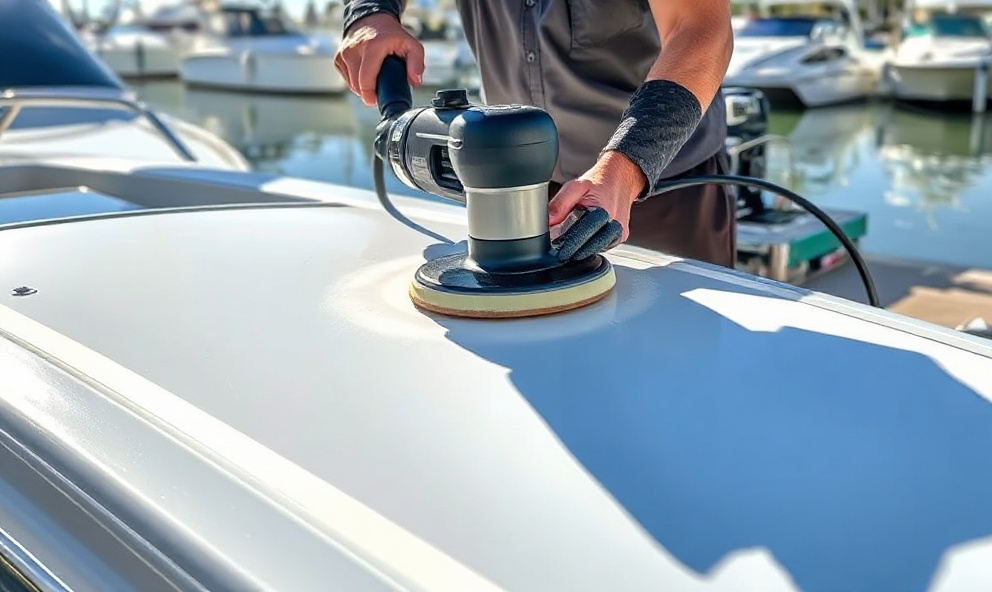
This is the workhorse stage of the process. A dual-action or rotary polisher combined with the appropriate compound grade cuts through oxidation, lifts chalky surface degradation, and begins restoring clarity to the gelcoat. Technicians work in controlled sections, adjusting pad selection and machine speed based on gelcoat condition. The mobile boat detailing services approach of Eagle Star Detail applies this machine polishing technique across a wide range of hull conditions.
Step 4: Polishing Stage
A finer polish follows the compound to eliminate micro-marring, haze, and swirl marks left behind by the cutting stage. This step is what separates a truly professional result from a basic oxidation removal job, refining the surface to a deep, uniform gloss that reflects light evenly across the entire hull.
Step 5: Protection Application
Depending on your selected service tier, protection is applied using carnauba wax, a synthetic polymer sealant, or a System X ceramic coating. Ceramic coatings deliver 1 to 3-plus years of UV resistance and hydrophobic protection compared to just 2 to 6 months from traditional wax, making them the preferred choice for boat owners prioritizing long-term durability and reduced maintenance.
Step 6: Final Inspection and Detail Finishing
The process concludes with a comprehensive final inspection. Trim, stainless hardware, and the waterline all receive individual attention using appropriate cleaners and protectants. This finishing stage ensures uniformity across every surface and delivers the complete, showroom-quality result that defines the Eagle Star standard.
Ceramic Coating vs. Wax for Boats: Which Protection Is Right for You
Choosing the right protective finish after polishing is one of the most consequential decisions a boat owner can make. Each option carries its own trade-offs in durability, cost, and maintenance, and understanding those differences clearly will help you invest wisely.
1. Traditional Carnauba Wax
Carnauba wax remains popular for its warm, rich gloss and straightforward application, but its performance ceiling is low in demanding marine environments. UV radiation, saltwater, humidity, and frequent rinsing break down the wax layer rapidly, with most applications lasting only 2 to 6 months under typical conditions. Owners in high-UV climates may need to reapply as often as three or four times per year. While the per-application cost is low, the cumulative labor and product expense adds up quickly, and repeated oxidation cycles between applications steadily degrade the underlying gelcoat.
2. Synthetic Polymer Sealants
Synthetic sealants represent a meaningful upgrade over carnauba wax, extending protection to roughly 6 to 12 months while offering noticeably better UV resistance and chemical durability. They bond to the gelcoat surface more effectively than natural wax and hold up better through repeated washdowns and exposure. For budget-conscious owners who want improved protection without committing to a full ceramic program, sealants are a solid mid-tier choice. According to a detailed comparison from Catalyst Marine Services, sealants reliably outperform wax in marine conditions, though they still require more frequent reapplication than ceramic options.
3. Ceramic Coatings
Professional-grade ceramic coatings such as System X use silica-based nanotechnology to form a semi-permanent chemical bond directly with the gelcoat. The result is a hard, transparent protective layer that delivers superior hydrophobic water beading, aggressive UV blocking, and strong resistance to oxidation and chemical staining. According to research from Seaboard Surface Solutions, ceramic coatings reliably last 1 to 3 or more years with proper maintenance, making them the preferred choice for serious boat owners. Eagle Star Detail is a certified System X installer offering lifetime warranty options, giving clients a professionally backed solution with documented longevity.
4. Total Cost of Ownership
The upfront investment in ceramic coating is higher than wax or sealant, primarily because of the preparation labor and professional application required. However, the total cost of ownership over a three-year period is typically lower. Multiple annual wax services, each requiring full polishing and reapplication, can exceed the combined cost of a single ceramic treatment plus routine maintenance washes. Ceramics also help preserve gelcoat integrity long term, reducing the likelihood of expensive oxidation restoration down the road. Fewer reapplication cycles and simpler upkeep make ceramics a financially sound choice for owners who plan to keep their vessel in top condition.
5. Why Surface Preparation Is Non-Negotiable
Before any ceramic coating is applied, existing oxidation, swirl marks, and surface contaminants must be completely removed. This requires professional multi-stage compounding and polishing, because ceramic coatings will amplify rather than hide subsurface defects. Skipping or shortcutting this prep step produces a coating that bonds to a compromised surface, undermining both adhesion and final appearance. This is precisely why the multi-stage correction process described in the previous section is not optional when ceramic protection is the end goal. It is the foundation on which durable, high-performance protection is built.
We Come to You: Mobile Boat Polishing at Your Marina or Driveway
One of the most practical advantages Eagle Star Detail offers boat owners throughout the Treasure Valley is a fully self-contained mobile service model. Rather than requiring you to trailer your vessel to a shop or coordinate a haul-out at a marina, the Eagle Star team travels directly to wherever your boat is located. Whether your vessel sits at a residential driveway, a covered storage facility, or a slip along a local waterway, the service comes to you on your schedule.
Serving Treasure Valley’s Most Popular Boating Destinations
Boat owners who keep their vessels near Lucky Peak Reservoir, Lake Lowell, or along the Boise River corridor can book on-site polishing without moving the boat a single mile. This is particularly significant for larger vessels such as pontoon boats, cabin cruisers, and ski boats, where trailering involves considerable time, expense, and logistical coordination. Eliminating those steps means less downtime and a faster path to a restored, protected hull ready for the water.
Fully Equipped, Zero Facility Requirements
Eagle Star Detail arrives with everything needed to complete the job professionally. Water systems, electrical power, and professional-grade dual-action and rotary polishing machines are all part of the mobile setup. You are not expected to provide a water hookup, an electrical outlet, or any other facility accommodations. This self-sufficient approach allows the team to operate effectively in open parking lots, gravel storage yards, and residential driveways alike.
Coverage Across the Entire Treasure Valley
The Eagle Star Detail mobile boat detailing service area spans Eagle, Boise, Meridian, Nampa, Caldwell, Garden City, and the broader surrounding communities. Regardless of where you store or launch your boat, scheduling professional boat detailing in Boise and the surrounding area is straightforward. Contact Eagle Star Detail at 208-918-0773 to confirm coverage for your specific location and book your appointment.
5 Reasons Boat Owners Near Eagle Choose Eagle Star Detail
When boat owners in the Eagle and Treasure Valley area search for professional polishing services, a handful of factors separate a truly qualified provider from a basic wash-and-wax operation. Here is why Eagle Star Detail consistently earns the call.
1. Certified System X Installer with Lifetime Warranty Options
Eagle Star Detail holds certified installer status with System X, a professional-grade, USA-manufactured ceramic coating line. That certification is meaningful in practice because it unlocks access to premium formulations, including lifetime warranty packages, that uncertified shops simply cannot offer. For boat owners investing in long-term gelcoat protection, a lifetime-backed coating provides measurable value over traditional wax that degrades in two to six months. Few providers in the Treasure Valley marine detailing market can match this level of warranty coverage.
2. Combined RV and Marine Expertise at Scale
Working on motorhomes and travel trailers requires mastering large fiberglass panels, rooftop oxidation, and multi-stage machine polishing across complex surface geometries. Those same skills transfer directly to boat hulls and decks. Technicians who regularly correct gelcoat on large RV surfaces bring a depth of surface experience that smaller or vehicle-only shops often lack, making a measurable difference on heavily oxidized lake boats.
3. Fully Mobile Service at Your Dock or Driveway
Rather than requiring you to trailer your vessel to a fixed facility, Eagle Star Detail brings all equipment directly to your marina slip, storage yard, or home driveway. This eliminates transport logistics, reduces risk of hull damage in transit, and keeps your schedule flexible.
4. Transparent Per-Foot Pricing with Tiered Packages
Service packages are structured around per-foot pricing benchmarks, so you know your investment before work begins. Tiered options cover basic polishing through multi-stage correction and ceramic coating, giving you a clear path from current condition to desired outcome without surprise costs at pickup.
5. Hyper-Local Roots and Environmental Familiarity
Eagle Star Detail operates from Eagle, Idaho, with direct knowledge of how high-altitude UV exposure, reservoir mineral deposits, and seasonal storage conditions degrade gelcoat on area lakes. That local context shapes every recommendation, from coating selection to polish aggressiveness, in ways that out-of-area providers simply cannot replicate.
Frequently Asked Questions About Boat Polishing
These are the most common questions boat owners ask before booking a professional polishing service, answered with the specific detail you need to make an informed decision.
How Much Does Boat Polishing Cost?
Boat polishing is priced per linear foot of vessel length, which creates a consistent baseline across different boat sizes while allowing adjustments for condition, hull complexity, and service level. Basic single-stage polishing with a wax or sealant finish typically starts around $24 per foot, suitable for hulls with light dullness and minimal oxidation. Premium multi-stage correction that includes compounding, machine polishing, and professional ceramic coating installation runs $45 per foot or higher, reflecting the additional labor, product cost, and expertise required. Severely oxidized hulls, complex hull shapes, or vessels requiring multiple correction passes will fall toward the upper end of that range. Eagle Star Detail provides custom quotes based on a direct inspection of your boat’s condition, ensuring you pay for exactly the work your hull requires.
How Often Should a Boat Be Polished?
Idaho’s high-altitude sun and intense UV exposure accelerate gelcoat oxidation faster than many boat owners anticipate. For hulls protected with traditional wax or sealant, annual polishing once per season is the standard recommendation to maintain gloss and prevent oxidation from deepening. Ceramic-coated hulls offer a significant maintenance advantage; a properly installed ceramic coating can protect the gelcoat for 1 to 3 or more years between full correction sessions, requiring only routine washing and occasional coating boosters in the interim. Pre-season spring detailing is the most popular service window locally, aligning with lake season preparation.
How Can I Tell If My Boat Needs Compounding Versus Just Polishing?
The clearest indicator that compounding is required is chalky white residue on the gelcoat surface. If that residue does not wipe away with a damp cloth, or if the hull shows severe overall dullness that polish alone cannot address, the oxidation has degraded the outer gelcoat layer. Compounding uses an abrasive cutting compound to remove that deteriorated material before polishing restores clarity and gloss. Skipping this step on a heavily oxidized hull produces poor, uneven results. Light surface haze or minor swirl marks, by contrast, typically respond well to polishing without compounding.
Does the Boat Need to Be Out of the Water?
No haul-out is required. Eagle Star Detail performs all polishing and coating services on boats sitting on trailers, in residential driveways, or at marina dry storage facilities throughout the Treasure Valley. This eliminates haul-out fees, marina scheduling delays, and the logistical burden of coordinating lift appointments, making professional detailing significantly more accessible for most boat owners.
How Long Does a Full Boat Polishing Session Take?
Most standard polishing jobs, covering a single-stage or two-stage correction with protective finish on a mid-size vessel, are completed in 3 to 8 hours. Larger boats, hulls with heavy oxidation requiring multiple compound passes, or projects that include ceramic coating installation may extend into a two-day process to allow for proper surface preparation, curing time, and final inspection. Accurate timelines are confirmed during the initial quote based on vessel size and observed condition.
Ready to Book Your Boat Polishing in Eagle, Idaho
Your hull deserves professional attention, and Eagle Star Detail makes it straightforward to get started. As a certified System X installer serving the Treasure Valley, Eagle Star restores gelcoat shine, removes oxidation, and applies long-lasting protective coatings tailored to your vessel’s specific condition and your budget. Whether your boat needs a single-stage polish or a full ceramic coating with lifetime warranty coverage, every service is designed to deliver measurable, durable results.
The mobile service model removes every logistical barrier. Eagle Star brings professional-grade equipment directly to your marina slip, home driveway, or storage facility across Eagle, Boise, Meridian, Nampa, and surrounding Treasure Valley communities. No trailering, no scheduling around a fixed shop location, and no wasted time during peak boating season.
Ready to protect your investment? Request a free quote today by contacting Eagle Star Detail directly. Ask specifically about the System X ceramic coating option, which includes a lifetime warranty and outperforms traditional wax by years rather than months. Eagle Star proudly serves Eagle, Boise, and the full Treasure Valley corridor, and the team is ready to bring showroom-quality results directly to you.
Conclusion
Your boat is more than just a vessel; it’s an investment worth protecting. As you’ve discovered throughout this guide, professional boat polishing near Eagle, Idaho offers benefits that go well beyond a shiny surface. A quality polish shields your gel coat from UV damage and oxidation, extends the lifespan of your boat’s finish, and keeps your vessel looking showroom-ready season after season.
The right detailing professional makes all the difference. Knowing what questions to ask, which techniques matter most, and what results to expect puts you firmly in control of the process.
Now it’s time to take action. Reach out to a trusted boat polishing service in the Eagle area today and give your boat the care it deserves. With the right team on your side, you’ll hit the water this season with confidence, pride, and a finish that turns heads at every dock.
About the Author
David Faustina
Founder & Certified Ceramic Coating Installer
David Faustina is a professionally trained and certified detailer specializing in paint correction, ceramic coating installation, and RV detailing. As founder of Eagle Star Detail, he personally works on every vehicle to ensure premium results and customer satisfaction.
Ready to experience professional detailing?
Eagle Star Detail specializes in professional mobile detailing throughout Boise and the Treasure Valley.