You finally bought that camper, hit the open road, and made some incredible memories. But now you’re back home and your rig is looking a little rough. There’s road grime caked on the sides, the interior smells a bit musty, and you’re not even sure where to start with the cleanup. Sound familiar?
This is exactly why so many RV owners find themselves searching for “camper detailers near me” when things get overwhelming. But here’s the thing: a lot of people have no idea what camper detailers actually do or why their services are worth considering in the first place.
If you’re new to the world of camper ownership, this post is for you. We’re breaking down everything that professional camper detailers handle, from deep interior cleaning to exterior polishing and everything in between. By the time you finish reading, you’ll know exactly what to expect when you hire a pro, what questions to ask, and why regular detailing can actually protect your investment for years to come. Let’s get into it.
Why Camper Detailing Is Not the Same as Car Detailing
If you’ve ever assumed that a quick trip through the car wash would clean up your travel trailer just fine, you’re definitely not alone. About 36% of current RV owners are first-timers, and most of them learn the hard way that campers and cars are completely different animals when it comes to detailing.
Here’s the core issue: your camper isn’t built like your car. RVs and travel trailers are covered in fiberglass, gelcoat, rubber roofing, and aluminum trim, each of which reacts differently to cleaning products and pressure. Using standard car wash soap on a rubber roof, for example, can dry it out and cause cracking over time. Gelcoat needs specific compounds and polishing techniques to restore its shine, not the same products you’d use on a clear-coated sedan. According to RV detailing experts at Fiberglass Worx, generic automotive products can damage decals, degrade rubber seals, and accelerate the very oxidation you’re trying to prevent.
The exposure problem makes things even worse. Your camper sits outside in the sun for months, gets pelted with highway debris at 65 mph, and collects road grime across every inch of its surface. That kind of wear builds up much faster than on a daily driver parked in a garage. Speedy’s detailing breakdown of RV vs. car care notes that oxidation and fading hit campers significantly faster because of this constant outdoor exposure.
Not every RV faces the same challenges, either. Toy haulers deal with heavy mud and cargo-area grime. Motorhomes have complex slide-outs, mixed siding materials, and cab sections that need special attention. Travel trailers commonly develop black streaks from roof runoff that stain the sidewalls. A qualified detailer knows how to handle each of these situations without causing damage.
For Treasure Valley camper owners specifically, Idaho’s high desert sun adds another layer of urgency. The elevation around the Boise area means stronger UV rays year-round, and the dramatic seasonal temperature swings put serious stress on exterior surfaces. That combination speeds up oxidation and fading faster than in milder climates, making professional UV protection and proper detailing products genuinely critical for preserving your investment.
Exterior Wash and Surface Decontamination
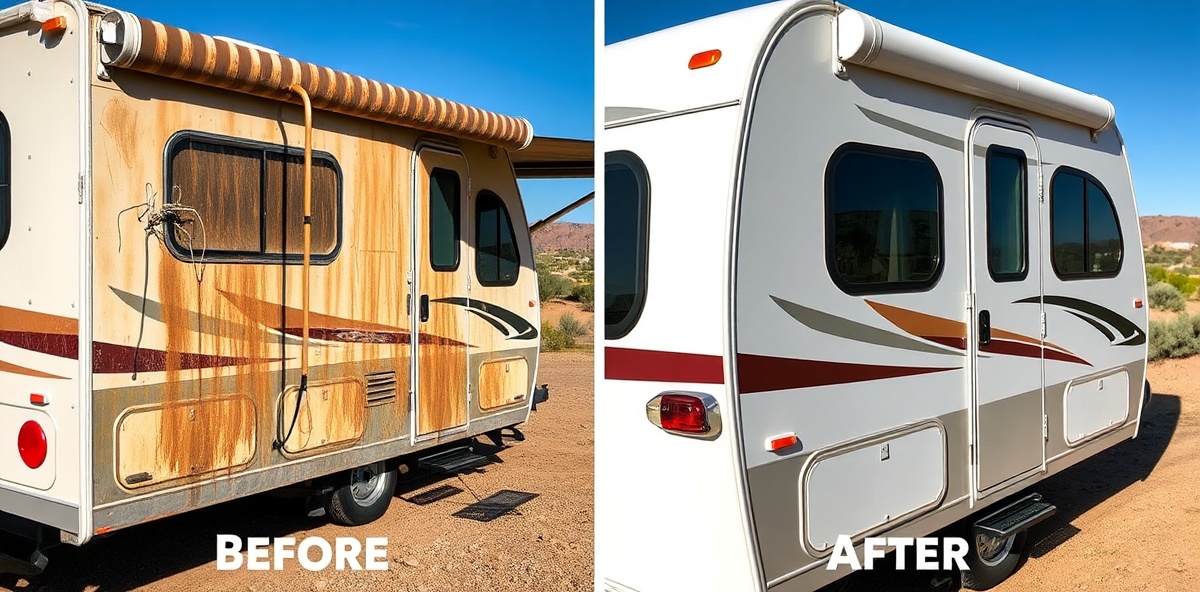
A proper exterior wash for your camper is a completely different process than what you’d do for your car. Professional camper detailers work through multiple stages to pull out road tar, bug residue, mineral deposits, and oxidation buildup that cling stubbornly to fiberglass and gelcoat panels. These contaminants don’t just look bad; they actively break down your camper’s surface over time if left untreated. A thorough RV detailing process typically includes a pre-wash decontamination treatment, hand washing, and a chemical or clay decontamination step to lift anything that soap alone can’t touch.
One tool that makes a huge difference on big rigs is a deionized or spot-free water system. On a car door, a few water spots are barely noticeable. On a 30-foot fiberglass trailer sitting in the Idaho sun, those same spots turn into a streaky mess across every panel. Deionized water filters out the minerals that cause spotting, so the rinse dries clean without leaving behind residue. It’s a small detail that produces a noticeably better result on large surfaces.
The areas that get skipped most often are wheel wells, storage bays, and slide-out tracks. Road grime packs into these spots on every trip, and it takes detail brushes and targeted cleaning agents to address them properly. Ignoring them shortens the life of seals, slides, and hardware.
Pricing in the Treasure Valley market typically starts around $10 per linear foot, so a 30-foot camper runs about $300 for a solid exterior wash package. That per-foot model keeps costs transparent and fair based on your unit’s actual size.
The best part? Mobile detailers like Eagle Star Detail bring everything directly to your driveway, storage lot, or campsite. No hitching up, no hauling to a shop, no hassle.
Oxidation Removal and Paint Correction for Campers
If your camper’s sidewalls have started looking chalky, faded, or dull, that’s fiberglass oxidation at work. It happens when UV rays, moisture, and heat break down the protective gelcoat layer over time, leaving behind that powdery, washed-out haze you can’t wash off with soap and water. The frustrating part is that it gets worse every single season you leave it untreated. What starts as mild dullness becomes porous, stained, and rough, eventually requiring much more aggressive correction or even repainting.
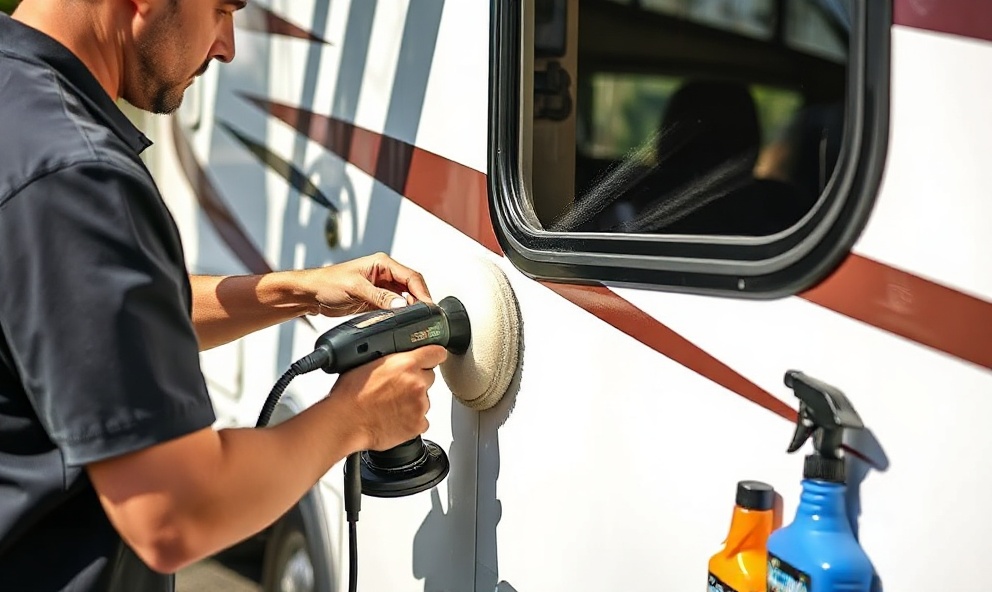
Professional detailers tackle oxidation removal using dual-action polishers with compound and polish stages carefully matched to how severe the damage is. Light oxidation might only need a single correction pass with a medium compound, while heavy oxidation can require a rotary buffer with aggressive cutting compounds before any refinement begins. RV-grade gelcoat is thinner and more sensitive than automotive clearcoat, so using the wrong technique or too much heat can cause more harm than good. That’s exactly why this work is best left to someone with real experience on fiberglass surfaces.
On a large motorhome or fifth wheel, paint correction is a full multi-hour process that’s often spread across more than one day. Each panel section is worked methodically to restore gloss and smoothness, and when it’s done right, the surface is properly prepped for a ceramic coating or sealant to bond to.
Here’s some genuinely good news for camper owners: light scratches, swirl marks, and water etching in the clearcoat or gelcoat can often be corrected through polishing alone, without any repainting involved. That saves you thousands of dollars compared to bodywork, and the results are often dramatic.
The single best piece of advice is to address oxidation early. Catching it before it requires heavy cutting means more of your original gelcoat is preserved, and the finished depth and clarity of the surface will be significantly better for it.
Roof Cleaning and Seal Inspection
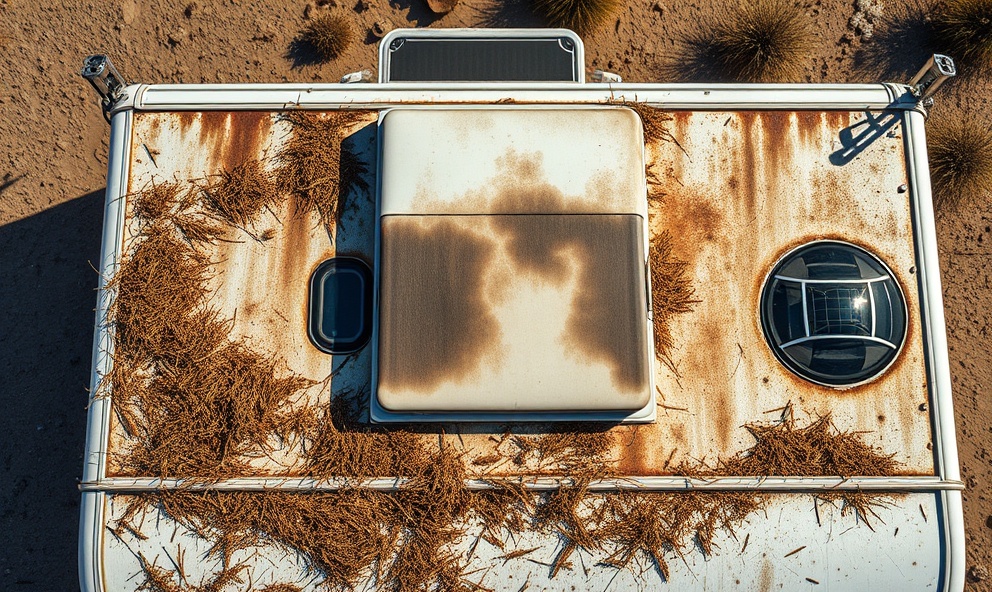
Your RV’s roof takes a beating that most people never think about. It’s constantly exposed to brutal Idaho sun, rain, tree sap, and biological growth, and because most of us never actually climb up there, problems can quietly develop for months before you notice water stains on your ceiling.
The first thing a professional detailer has to figure out is what your roof is made of. EPDM rubber, TPO membrane, and fiberglass each require completely different cleaning products. Standard household degreasers, citrus-based cleaners, or petroleum solvents can crack and degrade rubber compounds fast, potentially voiding your manufacturer warranty in the process. A knowledgeable detailer shows up with type-specific formulas designed to lift grime without eating away at the material underneath.
What those formulas actually remove might surprise you. Those dark black streaks running down your camper’s sidewalls? They come from oxidizing roof sealant mixing with dirt and algae as it drips downward. Regular washing with a garden hose simply cannot break down UV-baked grime or biological growth embedded in the surface texture. Proper roof cleaning scrubs all of that away with soft-bristle brushes and the right chemistry.
Here is where a good detailer earns their keep: while they are up on the roof cleaning, they visually inspect every seam, vent flashing, skylight edge, and penetration point. Catching a failing seal early costs almost nothing to fix. Catching it after water has been slowly soaking into your walls and subfloor for a season is a very different story. Eagle Star Detail’s mobile RV roof inspection service builds this check directly into the cleaning process.
After cleaning, a UV-protective roof conditioner gets applied to restore flexibility to rubber membranes and create a barrier against the sun’s drying effects. Skipping this step is like washing your skin and never moisturizing; the material dries out, becomes brittle, and eventually cracks.
In the Treasure Valley market, roof service is typically priced as a per-linear-foot add-on, making it easy to bundle onto a full exterior detail without any complicated quoting.
Interior Detailing: What a Full Camper Clean Actually Covers
Once you step inside a camper, the cleaning challenges get a lot more personal. You’re dealing with a compact living space that absorbs everything: pet hair ground into dinette cushions, cooking smells baked into upholstery, and mold quietly developing in soft ceiling panels after a rainy trip. Professional detailers tackle these problem areas using steam cleaning and hot water extraction, pulling embedded debris and allergens out of fabrics rather than just pushing them around. A simple vacuum won’t get the job done here.
Hard surfaces need just as much attention, but they require a gentler approach. Cabinet faces, laminate countertops, and vinyl flooring can actually be damaged by harsh household cleaners that aren’t formulated for RV-grade finishes. A trained detailer uses surface-appropriate products for RV interiors that sanitize bathroom wet bays, wipe down kitchen surfaces, and clean vinyl floors without stripping protective coatings or leaving residue behind.
Slide-outs are often the most overlooked zone in any interior detail. Every time you extend a slide at a campsite, the floor and lower wall panels collect tracked-in sand, gravel, and moisture. That debris scratches surfaces and can compromise seals over time, so professional RV interior detailing packages treat slide-out areas as a dedicated priority.
For stubborn odors from pets, smoke, or mildew, air fresheners are a temporary fix at best. Enzyme-based cleaners break down the organic matter causing the smell, while ozone treatments neutralize odor molecules throughout the entire interior. It’s a noticeably different result compared to masking the problem.
Timing matters too. A full interior detail is one of the smartest moves you can make before listing your camper for sale or after wrapping up a long camping season. It restores that clean, fresh feel and signals to buyers that the rig has been well cared for.
Ceramic Coating: The Longest-Lasting Protection for Your Camper
If you’ve made it through the wash, decontamination, oxidation removal, and interior cleaning steps, you’re already doing more than most camper owners ever will. But if you want the absolute best long-term protection for your investment, ceramic coating is the next level worth understanding.
Here’s why so many RV owners are making the switch.
1. It bonds directly to the surface at a molecular level. Unlike wax, which just sits on top of your camper’s gelcoat or painted panels, a ceramic coating forms a chemical bond with the surface itself. The result is a hard, glass-like hydrophobic layer that causes water, road grime, bug splatter, and UV rays to roll right off. Ceramic coating protects RV surfaces by resisting oxidation and environmental damage far better than anything you’ll find in a spray bottle at the auto parts store.
2. It saves serious time for owners who actually use their rigs. According to the RV Industry Association, average annual RV usage jumped to 30 days in 2025, up 50% from just four years earlier. That means more road miles, more sun exposure, and more grime collecting on your exterior. A ceramic coating makes post-trip cleanup dramatically faster because contaminants simply don’t stick the way they do on an unprotected surface. A quick rinse handles what used to require a full wash day.
3. Lifetime warranty options make it a real long-term investment. Eagle Star Detail in Eagle, Idaho is a certified System X® installer, which means they can apply coatings backed by lifetime warranty options when properly maintained. For motorhome and trailer owners who plan to keep their rig for years, that kind of coverage changes the math entirely. You’re not just paying for a service; you’re protecting an asset worth tens of thousands of dollars.
4. Proper prep comes first, which is why this is the premium tier. A ceramic coating can only perform as well as the surface underneath it. That means paint correction and full decontamination must happen before a single drop of coating goes on. Skipping this step leads to trapping imperfections under the coating permanently. This is exactly why ceramic coating sits at the top of a complete detail package rather than being a standalone shortcut.
5. It outlasts wax and sealant by years, not months. Traditional wax on a large RV surface typically lasts three to six months before it breaks down from UV exposure and washing. A quality ceramic coating for an RV can last several years with proper care, and lifetime-warrantied professional systems push that protection even further. For large surfaces like a 40-foot motorhome, not having to reapply protection multiple times a year is a significant practical and financial benefit.
What to Look for When Hiring a Camper Detailer Near You
Now that you know what good camper detailing looks like, the next step is finding someone who can actually deliver it. Not every detailer who works on cars is ready to tackle a 40-foot motorhome or a travel trailer with a rubber roof. Here are five things to check before you book.
1. Confirm They Have Real RV Experience
Ask directly whether they regularly detail RVs, travel trailers, and motorhomes, not just cars. Fiberglass gelcoat, EPDM rubber roofs, and aluminum sidewalls all respond differently to polishing compounds and chemical cleaners than standard automotive clear coat does. A detailer who only works on cars can cause swirl marks, strip protective seals, or apply the wrong product to your roof entirely. Look for someone who can explain their process for each surface type.
2. Find Out If They’re Truly Mobile
Many campers live in storage facilities with zero water or power hookups. Ask if the detailer brings their own water tank and generator so they can work anywhere your rig is parked without depending on your setup.
3. Demand Clear, Per-Foot Pricing
Per-linear-foot pricing is the industry standard for RV work. Ask for a breakdown of exactly what each package includes, and confirm whether roof cleaning is bundled in or priced separately, since it often costs extra.
4. Verify Coating Certification
If ceramic coating is on your list, only book a certified installer with a named brand like System X®. Uncertified applicators simply cannot offer manufacturer-backed warranties, no matter what they promise.
5. Read RV-Specific Reviews
General five-star reviews for car work tell you very little. Search for reviews that specifically mention travel trailers, motorhomes, or campers to confirm the detailer has handled rigs like yours.
How Often Should You Get Your Camper Professionally Detailed
Most RV owners do well with a full professional exterior detail at least once a year. The best time to schedule it is either right before the camping season kicks off or immediately after it wraps up. That timing matters because oxidation and UV damage don’t pause while your camper sits in storage. Getting ahead of it means your detailer is removing fresh contamination rather than trying to reverse months of neglect.
Where and how you store your camper changes that schedule quite a bit. If your rig lives outside or under partial shade in a place like the Treasure Valley, the southern Idaho sun is actively working against your gelcoat and fiberglass year-round. That kind of exposure typically calls for more frequent professional attention than a camper kept inside a fully enclosed facility. Idaho summers are no joke when it comes to UV intensity, and oxidation can set in faster than most new owners expect.
If your camper has a ceramic coating applied by a certified installer like Eagle Star Detail, the maintenance picture looks a lot more manageable. Instead of a full decontamination detail every season, a coated camper usually just needs regular maintenance washes to stay in great shape. That translates to real savings in both time and money over the life of your rig.
For owners using their camper 30 or more days a year, one annual detail probably is not enough on its own. A mid-season rinse and inspection helps you catch bug buildup, hard water spots, and roof debris before they etch into the surface and create bigger problems. Think of it as a check-in rather than a full service.
Staying on schedule gets much easier when you have a simple reference to follow. Eagle Star Detail offers a free RV Care Guide written specifically for Boise-area owners, covering seasonal maintenance tips tuned to Idaho conditions. Grabbing that before your first season is one of the easiest ways to start on the right foot.
Finding the Right Camper Detailer Starts With Knowing What You Need
By this point, you’ve got a solid picture of what professional camper detailing actually involves. From a thorough exterior wash and oxidation removal to roof cleaning, interior detailing, and ceramic coating as the gold-standard long-term protection, each service plays a specific role in keeping your camper clean, protected, and looking its best season after season.
The good news is that you don’t have to tow your rig anywhere to get it done. Mobile detailers come fully equipped to your driveway, storage lot, or campsite anywhere in the Treasure Valley, bringing their own water, power, and professional tools right to you.
When you’re ready to request a quote, have your camper’s length handy. Per-foot pricing makes estimates straightforward and transparent upfront, so there are no surprises.
Eagle Star Detail is an owner-operated, System X® certified option serving Eagle, Boise, Meridian, and surrounding Treasure Valley communities, with RV exterior services starting at $10 per foot.
Your next step is simple: download the RV Care Guide or book a mobile detailing appointment before your next camping season kicks off.
Conclusion
Your camper represents more than just a vehicle; it’s the vessel for your best adventures. Professional camper detailers handle the heavy lifting so you don’t have to, tackling everything from stubborn road grime and oxidized exteriors to musty interiors and neglected surfaces. Regular detailing doesn’t just keep things looking great, it actively protects your investment and extends the life of your rig. Knowing what to ask and what to expect makes hiring a pro a straightforward, confident decision.
Now it’s your turn to take action. Search for a reputable camper detailer in your area, ask about their services, and schedule a session before your next trip. Your future self, pulling into a campsite in a clean, well-maintained rig, will thank you for it. The open road is waiting, and it deserves a camper that looks the part.
About the Author
David Faustina
Founder & Certified Ceramic Coating Installer
David Faustina is a professionally trained and certified detailer specializing in paint correction, ceramic coating installation, and RV detailing. As founder of Eagle Star Detail, he personally works on every vehicle to ensure premium results and customer satisfaction.
Ready to experience professional detailing?
Eagle Star Detail specializes in professional mobile detailing throughout Boise and the Treasure Valley.